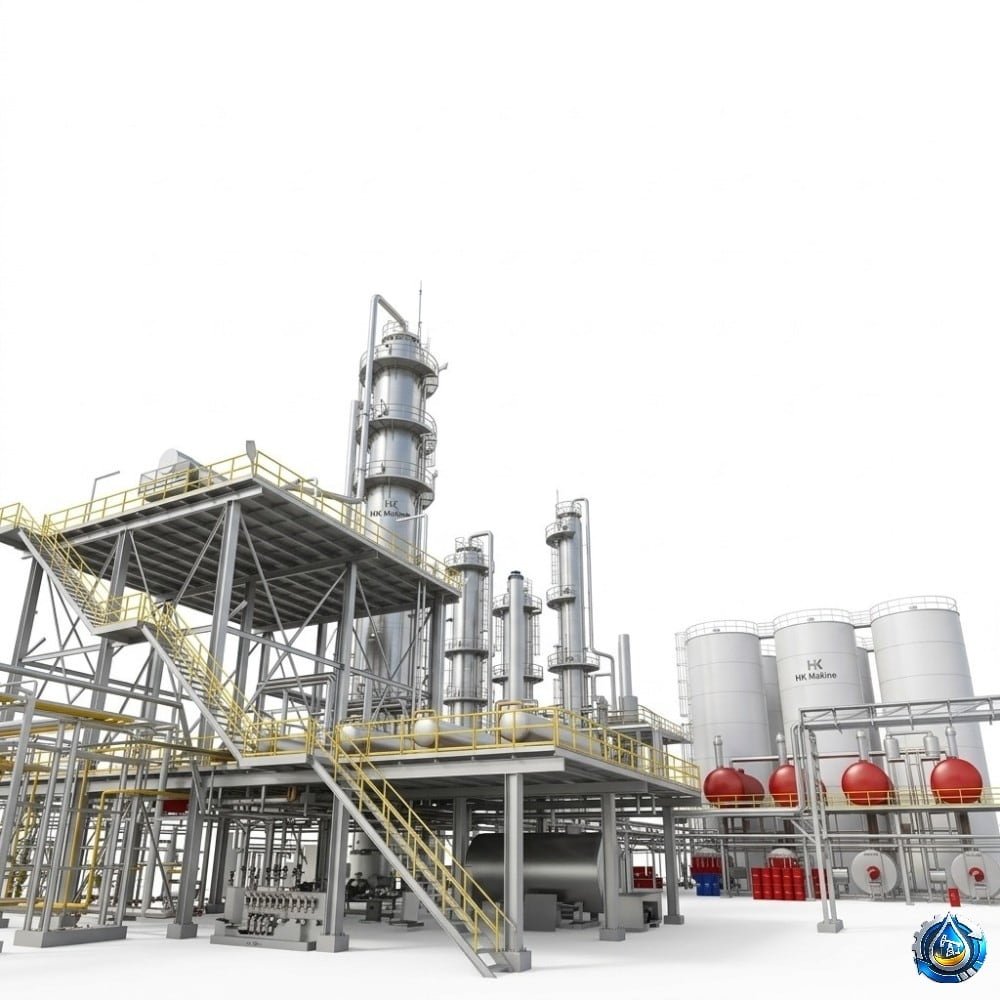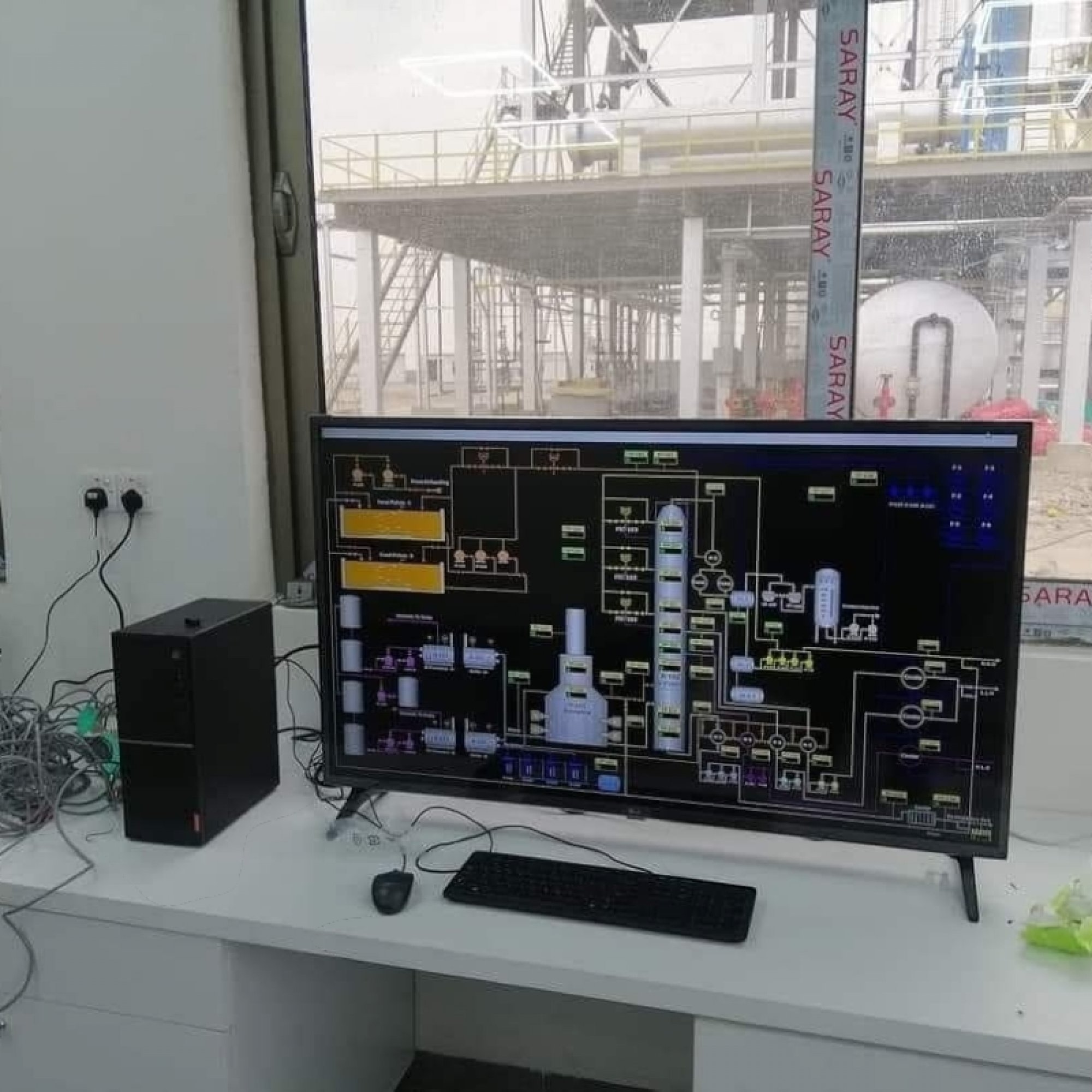
As HK Makine, we design and manufacture crude oil refinery plants, which are among the most critical assets of the petroleum and petrochemical industry, in compliance with international standards. We offer turn-key integrated PFD solutions ranging from 500-liter to 100,000-liter batch horizontal vacuum distillation reactors to continuous fractional atmospheric and vacuum column plants with a minimum capacity of 50,000 barrels/day (BPD).
A crude oil refinery is a facility that separates hydrocarbons of different carbon chains present in crude oil by utilizing their boiling point differences. As HK Makine, we offer two primary distillation technologies depending on our clients' investment volumes.
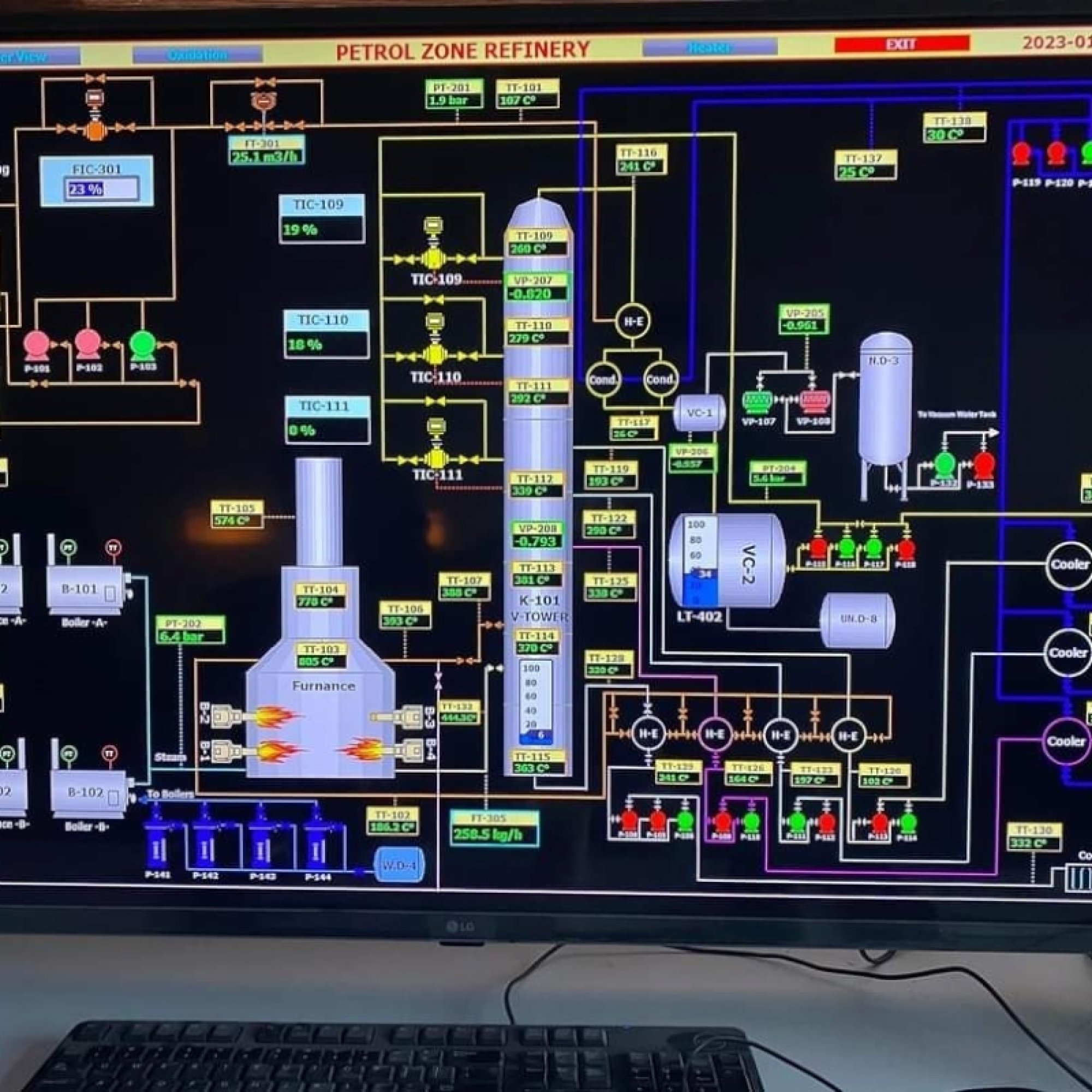
In continuous column distillation plants, crude oil passes through preheating stages and enters the electrostatic desalter unit. Here, corrosive salts are separated from water via electrostatic forces. Next, the oil is heated to 370-400°C in furnaces and injected into the atmospheric fractionating column (CDU). Via sieve and bubble cap trays inside the column, light gas and naphtha molecules with the lowest boiling points condense and are drawn from the upper sections, while heavier hydrocarbons settle to the bottom of the column.
The Critical Role of Vacuum Distillation (VDU): Heavy residues above 350°C from the atmospheric column are transferred to the vacuum distillation column before thermal cracking occurs. By lowering the boiling points under vacuum (20-50 mbar), these heavy residues are separated into high-purity asphalt, base oil, and vacuum gas oil fractions.
We offer two primary refinery designs tailored to your layout area, budget, and crude oil flow rate:
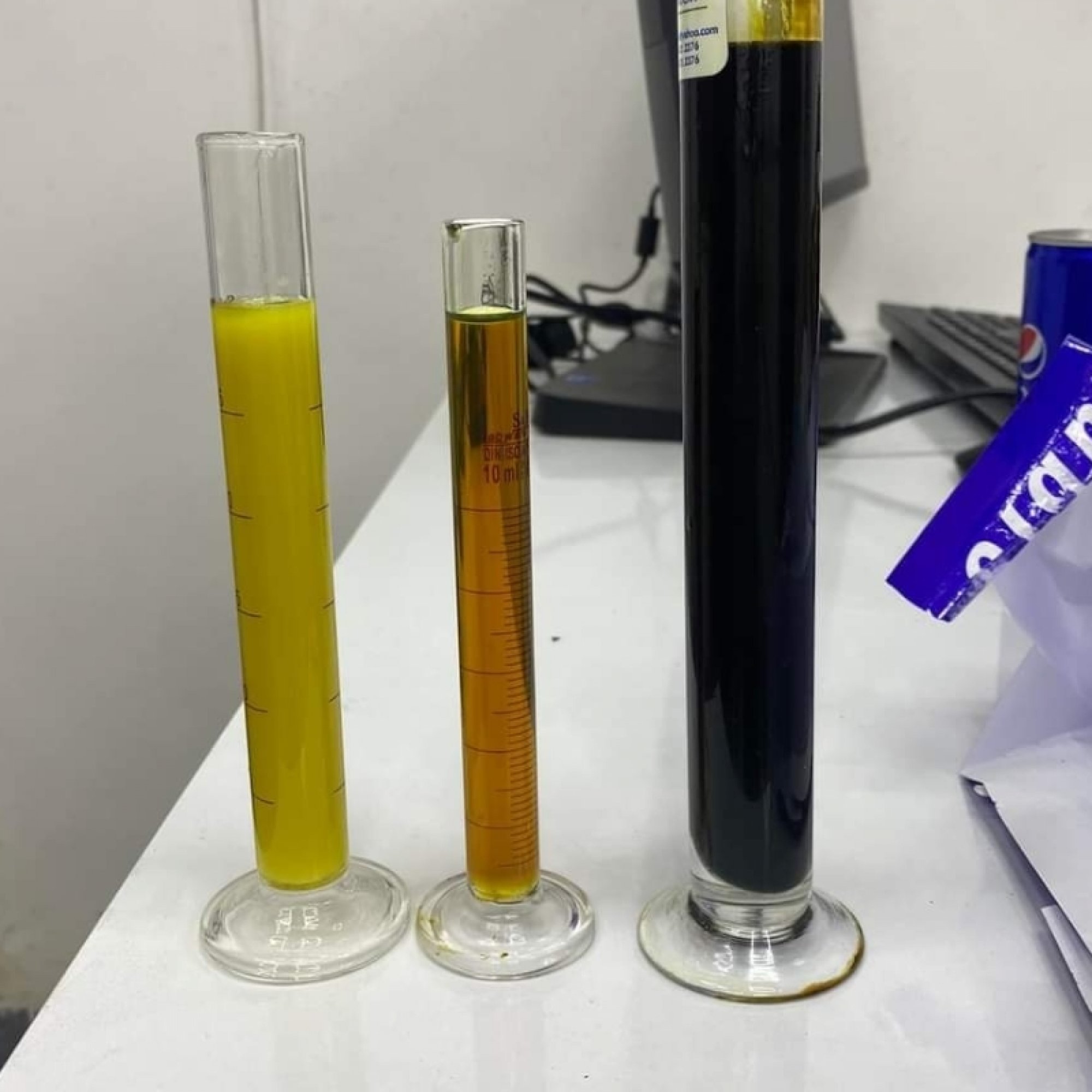
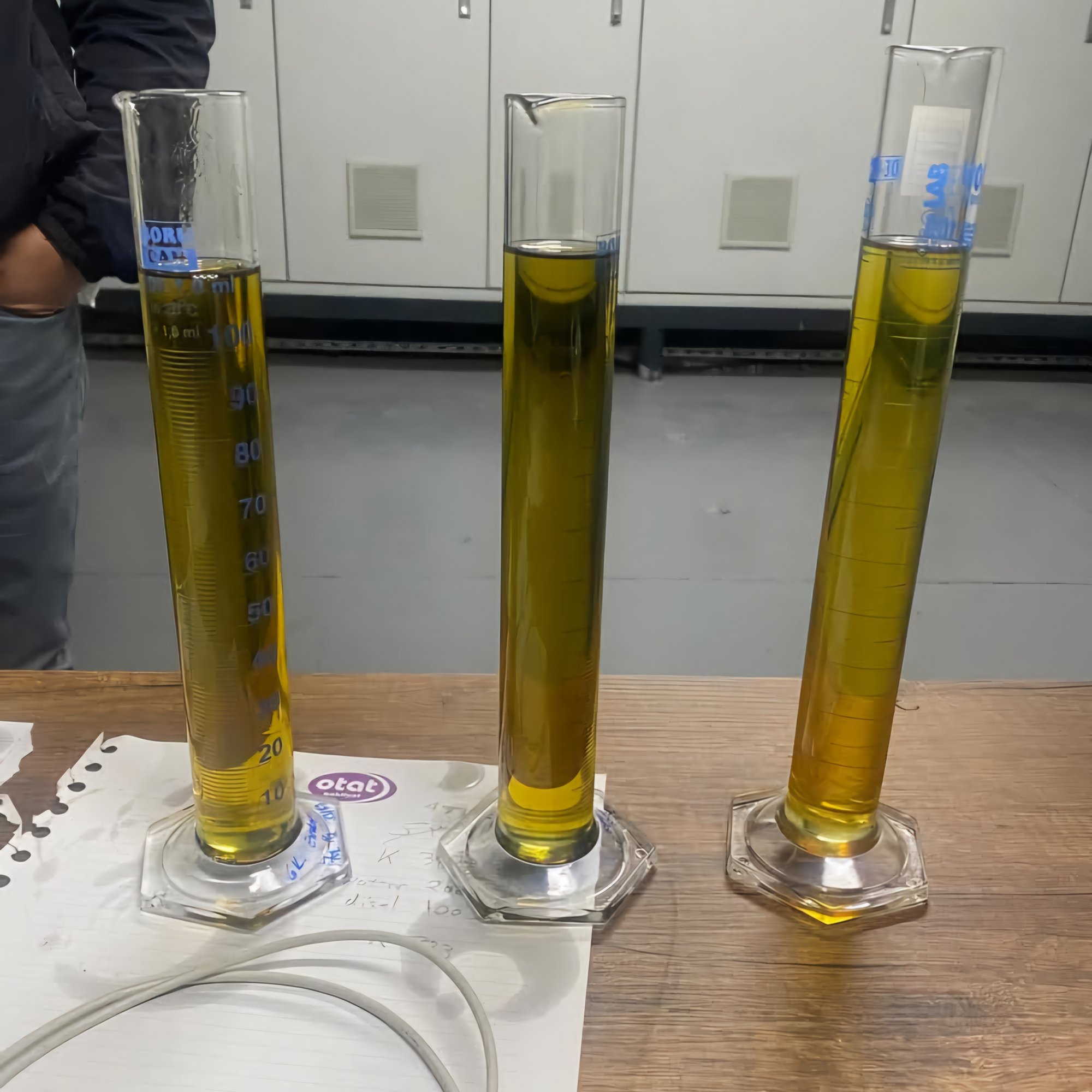
The API gravity and sulfur content of the crude oil directly determine the mechanical alloy and column design of the refinery to be built. Here are the typical fractional yields of global crude oils:
| Product Name | Carbon Chain | Boiling Range (°C) | Flash Point (°C) | Density (g/cm³) |
|---|---|---|---|---|
| Refinery Gases (LPG) | C1 - C4 | < 20 °C | -104 °C to -60 °C | 0.540 - 0.580 |
| Naphtha / Light Gasoline | C5 - C10 | 35 - 180 °C | -43 °C to 15 °C | 0.720 - 0.775 |
| Kerosene / Jet Fuel (Jet A-1) | C11 - C13 | 180 - 250 °C | > 38 °C | 0.790 - 0.820 |
| Diesel (Gas Oil) | C14 - C20 | 250 - 350 °C | > 55 °C | 0.820 - 0.845 |
| Heavy Fuel Oil | C20 - C25 | 350 - 450 °C | > 65 °C | 0.860 - 0.920 |
| Vacuum Residue (Asphalt/Bitumen) | C25+ | > 450 °C | > 230 °C | 0.980 - 1.050 |
| All fractional values are 100% compliant with ASTM (American Society for Testing and Materials) laboratory criteria. | ||||
Corrosive mineral salts mixed with crude oil cause severe corrosion in pipes and column trays. Our desalter unit utilizes high-voltage electrostatic settling to quickly remove salt and water from the oil, protecting system life.
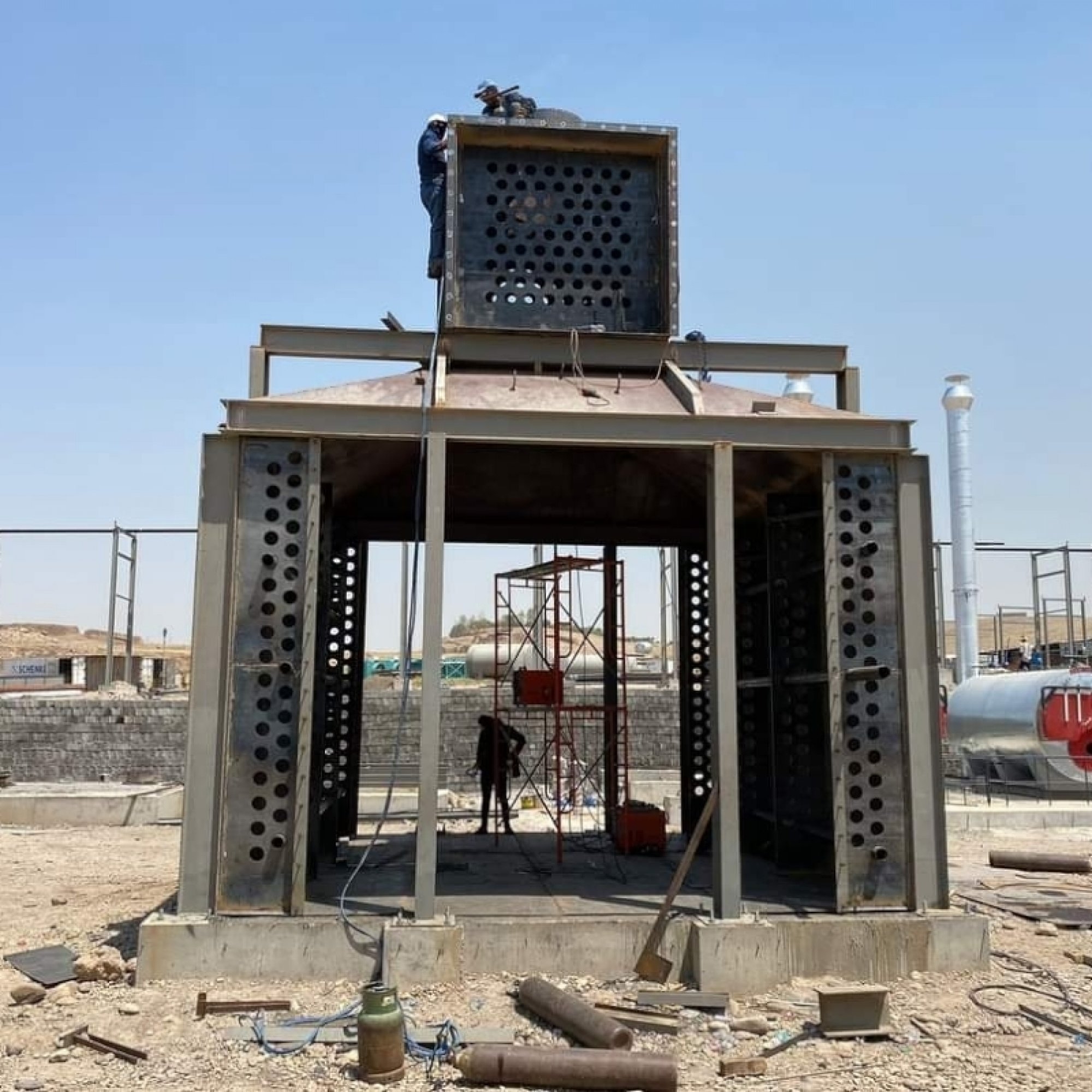
High-strength furnaces heat crude oil to 350-400°C before entering the atmospheric column. With heat recovery exchangers, energy from hot products exiting the column is utilized to preheat the cold incoming crude, improving fuel efficiency by 40%.
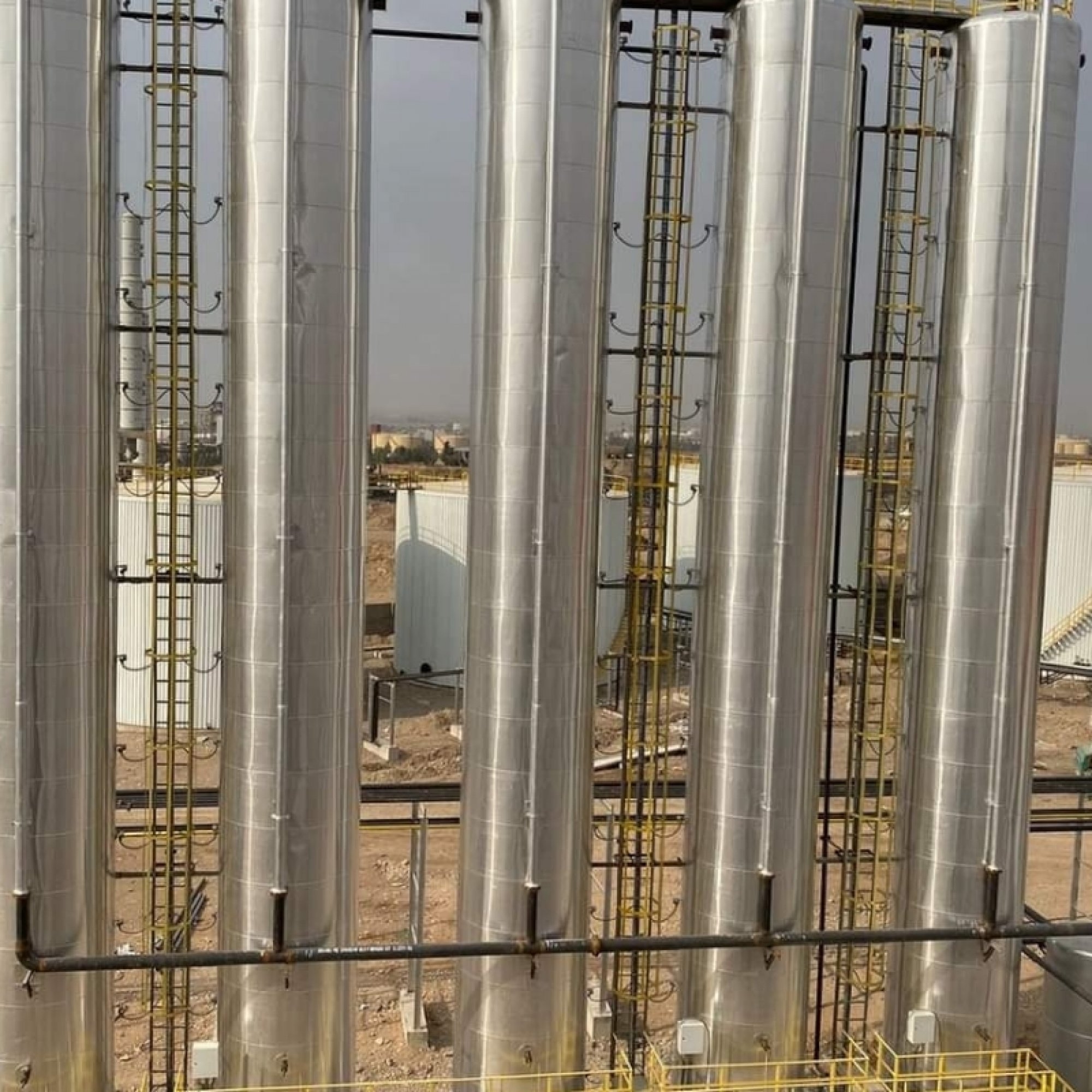
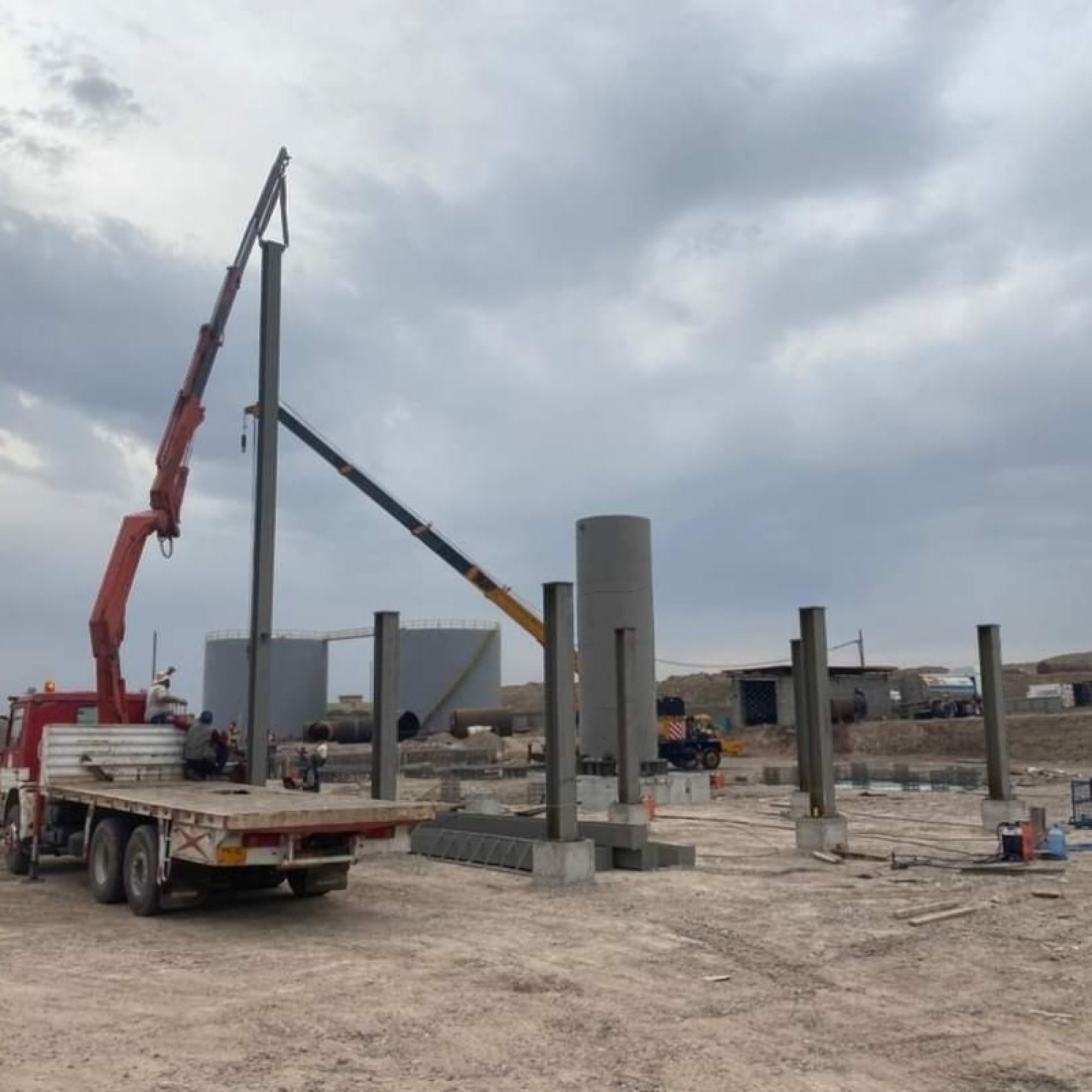
The column body is manufactured from high-strength carbon-alloy pressure steel. Internally, it is equipped with bubble cap or valve trays that facilitate gas rising and liquid falling to separate fractions cleanly. Each tray draw line has stainless steel control valves and level transmitters.
The plant is equipped with a DCS (Distributed Control System) that coordinates smart control valves, temperature transmitters, and flow regulators. In case of unexpected overpressure, safety relief valves redirect gases to the flare system immediately for ultimate protection.
Atmospheric CDU Columns | Vacuum VDU Towers | Horizontal Batch Reactors | Gaziantep
+90 536 037 3281Copyright 2026 HK Makine - Nizip / Gaziantep. All Rights Reserved.