Plastic Prolysis Plant

Plastic Prolysis Plant

Product Images


Plastic Prolysis Plant

Plastic Prolysis Plant

Plastic Pyrolysis Plant Manufacturer | Waste Plastic to Fuel | HK Makine +90 536 037 3281

Plastic Pyrolysis Plant Manufacturing

HK Makine manufactures industrial plastic pyrolysis plants. Pyrolysis oil, carbon black and synthesis gas from waste PE, PP, PS and mixed plastics. Custom capacity from 1 to 50 tonnes per day. Turnkey installation across Turkey from our Gaziantep factory for the recycling, chemical and energy sectors.

1 – 50 Tonnes/Day 80–95% Oil Yield (PE/PP) PE / PP / PS / Tyres Pyrolysis Oil + Carbon Black Turnkey Installation Nationwide Delivery
Gaziantep Factory | Plastic Pyrolysis Plant | Waste Plastic → Fuel + Carbon Black | Custom Capacity | Turkey-Wide Delivery
1 – 50
T/Day
Capacity
Range
80–95%
Oil Yield
PE/PP
3 Products
Oil + Carbon
Black + Gas
81
Provinces
Delivered
Product Overview

What Is a Plastic Pyrolysis Plant? How Does It Work?

A plastic pyrolysis plant is a thermal conversion system that heats waste plastic and tyres in an oxygen-free environment at high temperatures (350–550°C), breaking molecular bonds to produce pyrolysis oil, carbon black and combustible gas. This process converts non-recyclable waste plastics into valuable energy resources.

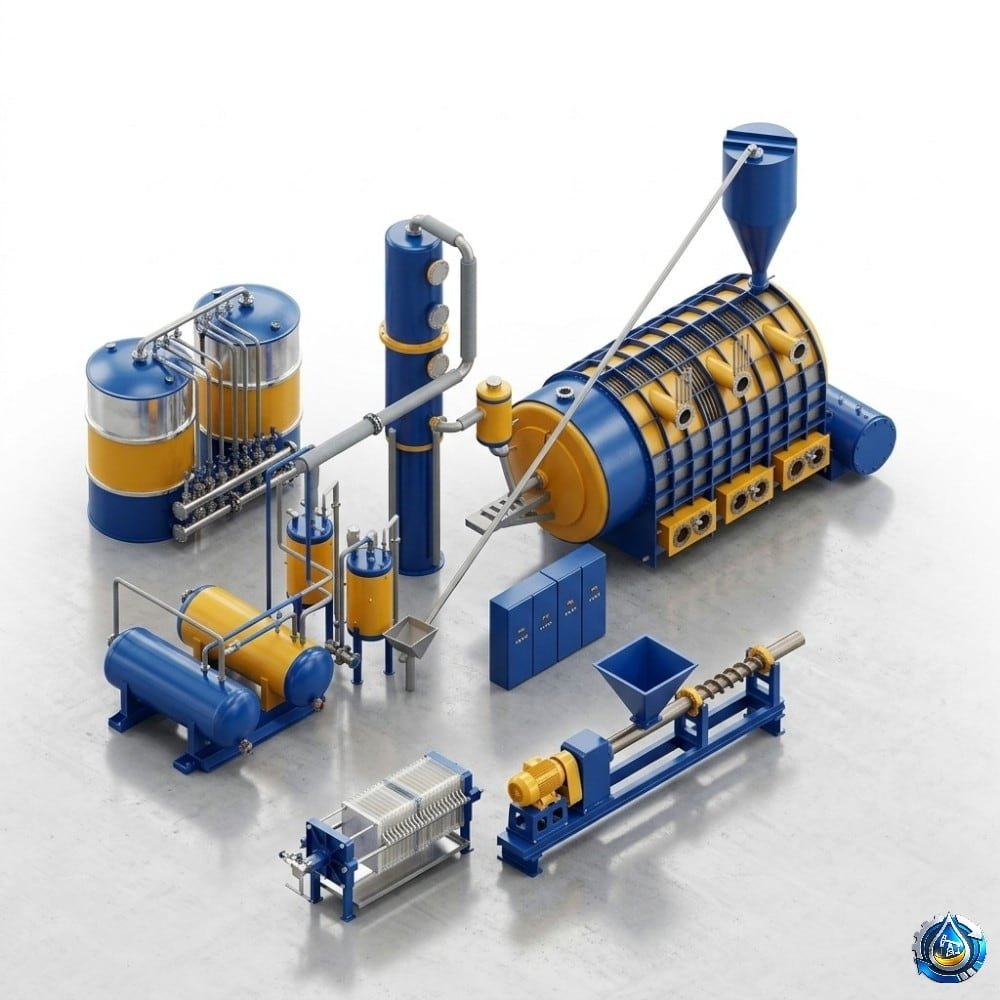
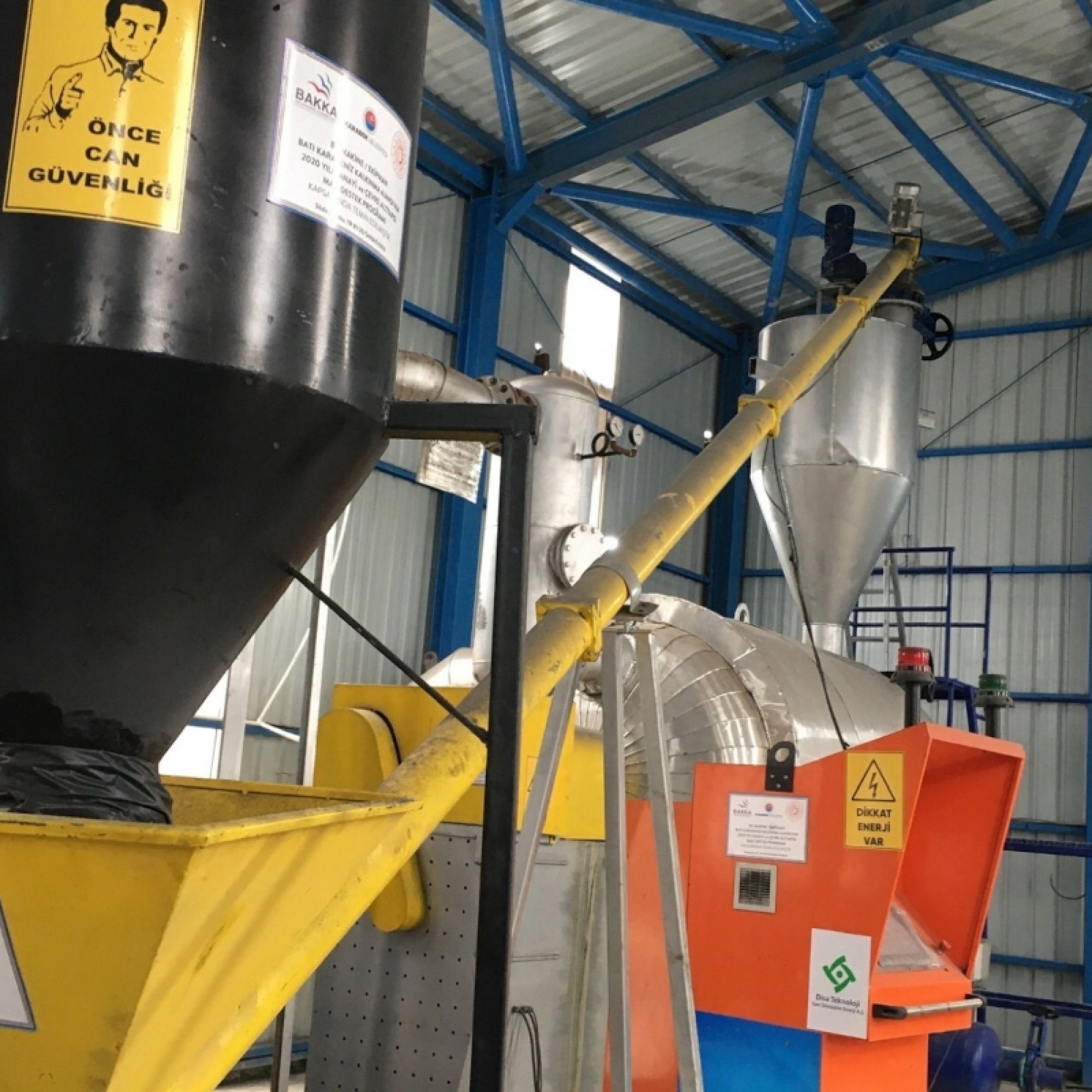
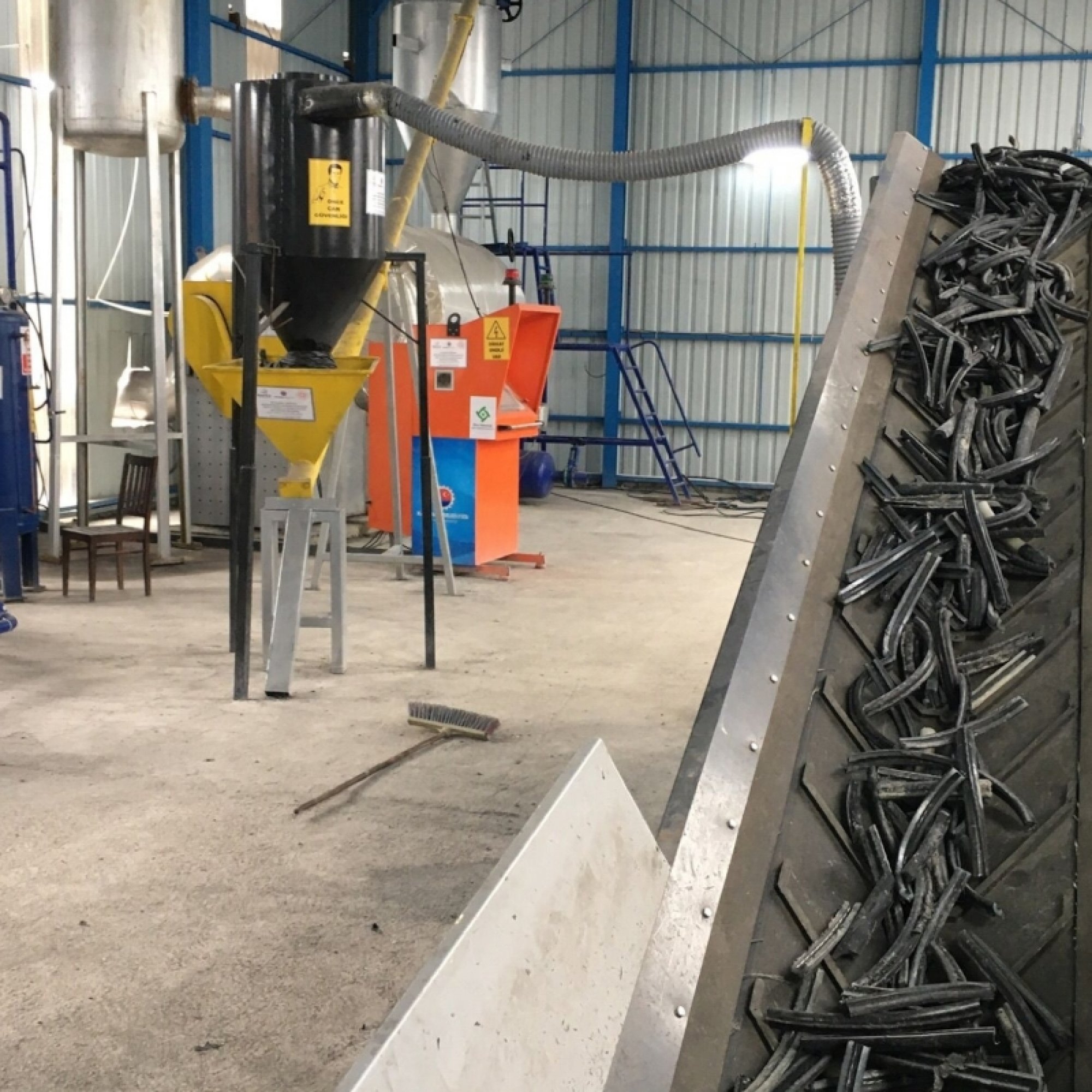
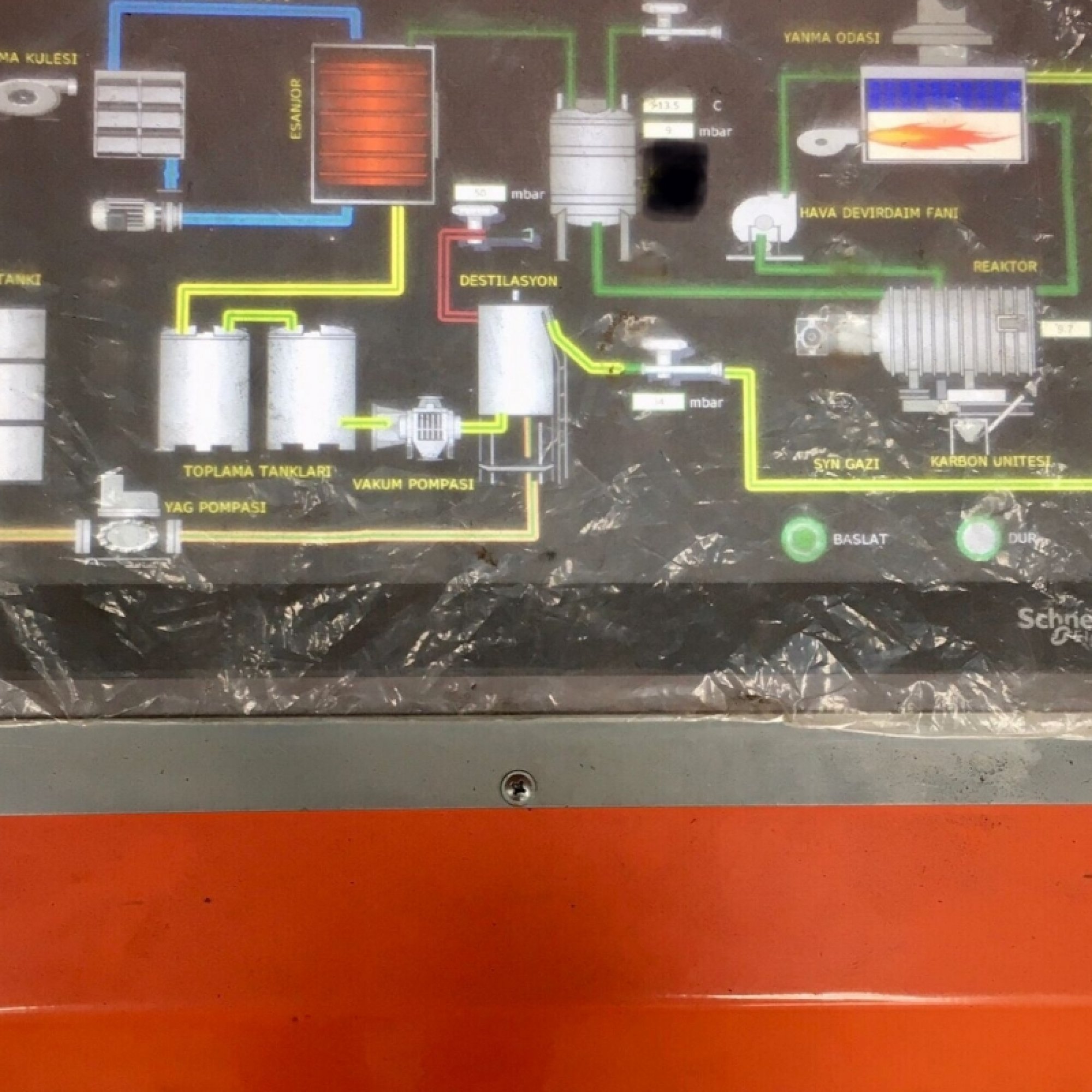
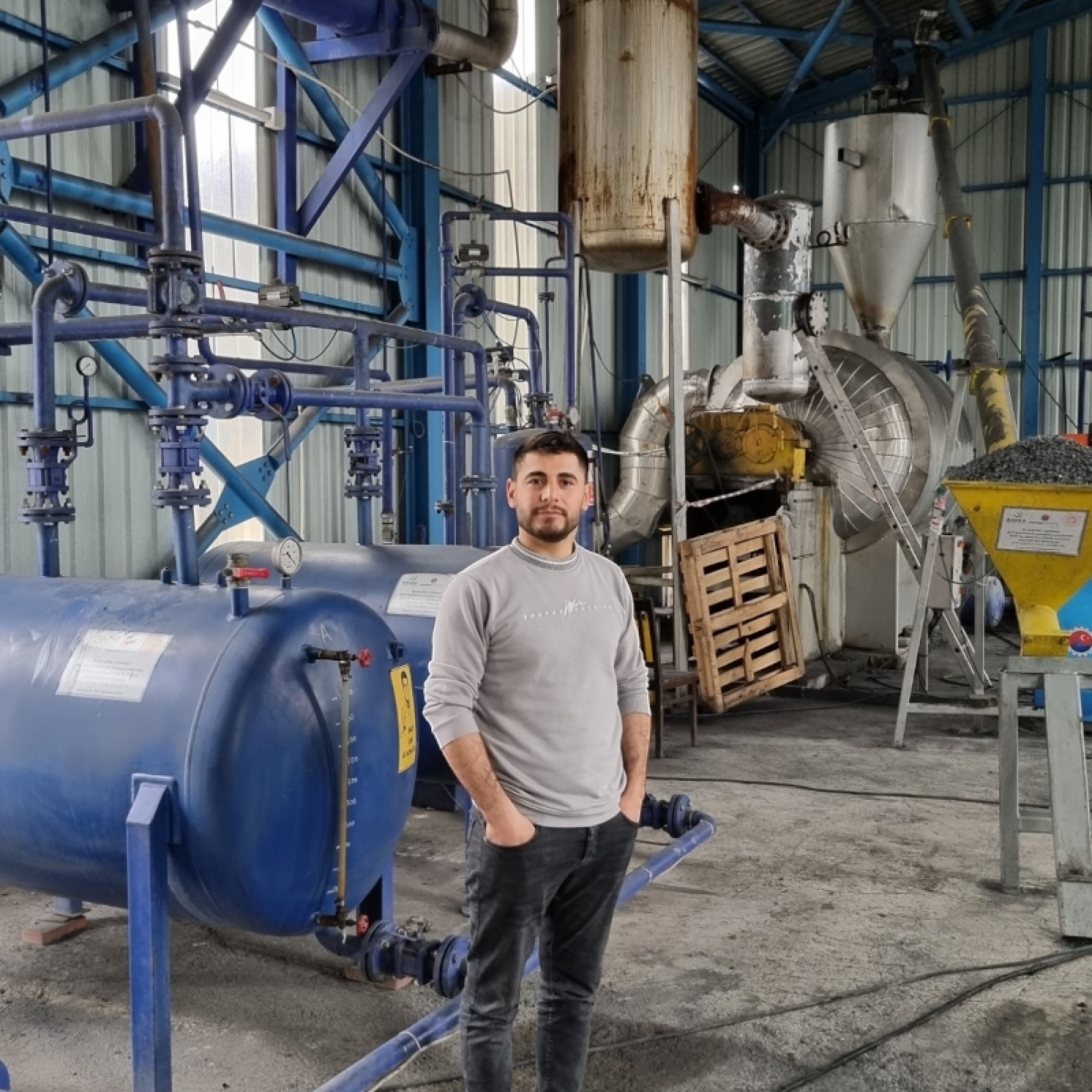
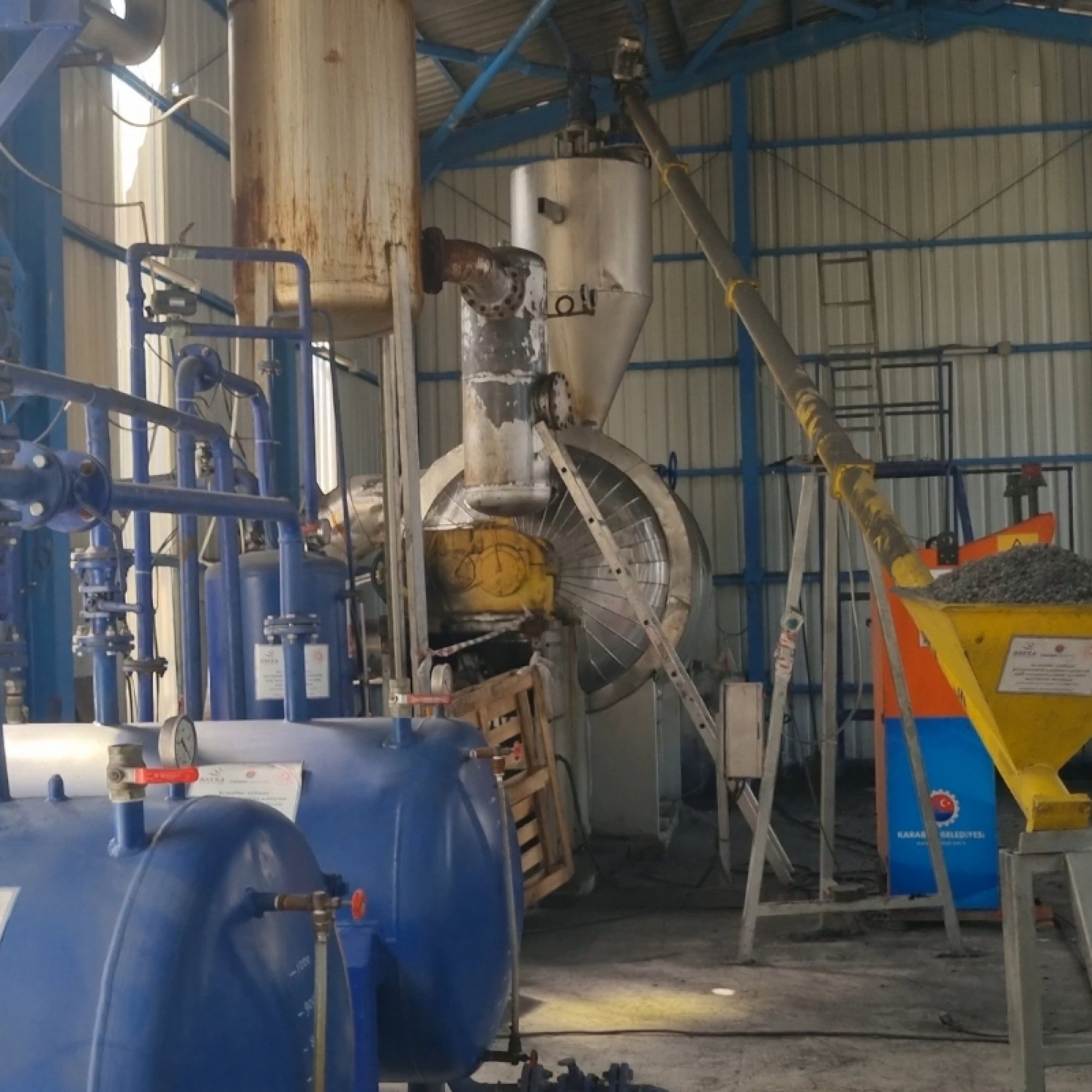
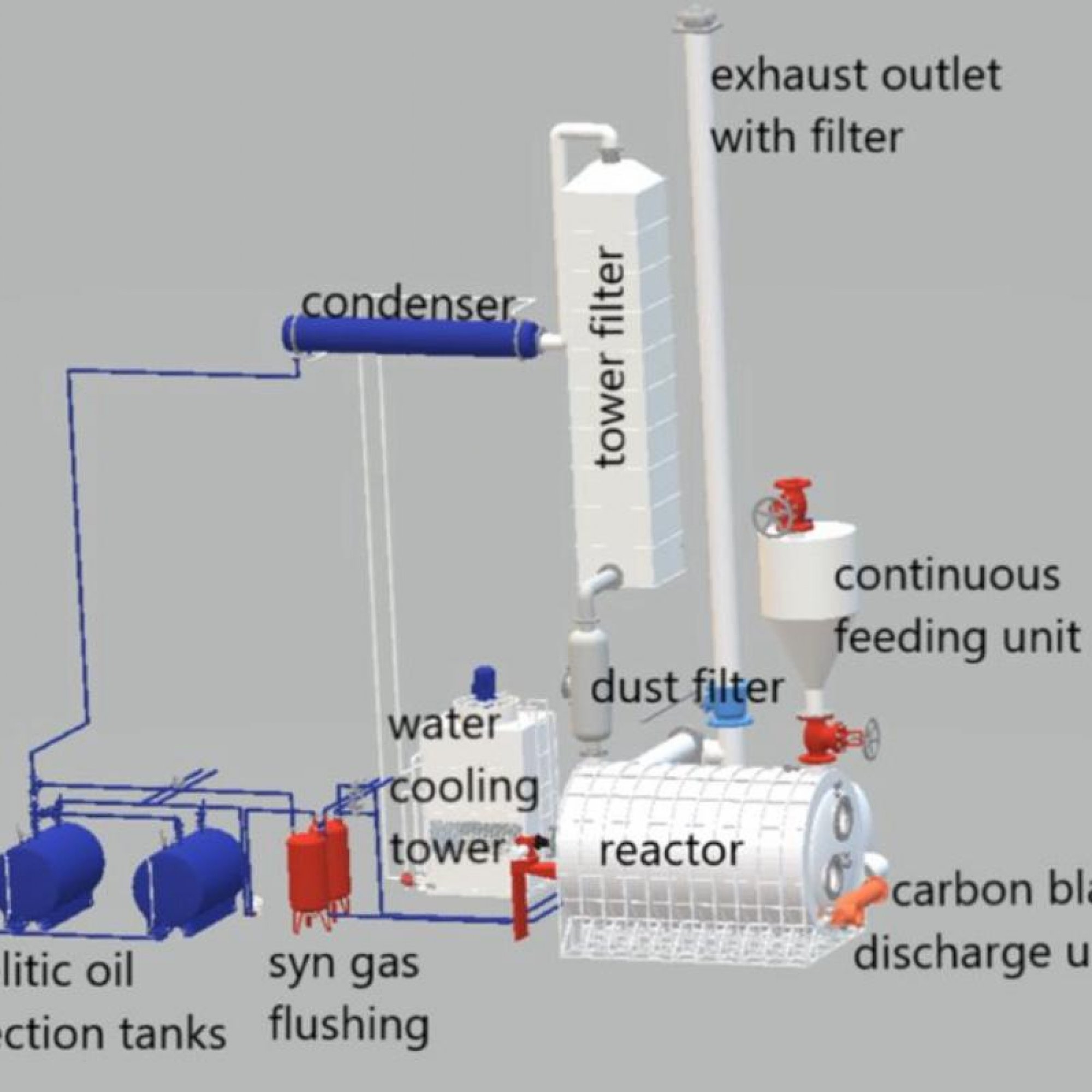
HK Makine plastic pyrolysis plants are delivered as fully integrated production lines comprising a shredder, pyrolysis reactor, cooling and condensation system, gas purification unit, carbon black collection system and automation panel.

Why plastic pyrolysis? Disposing of dirty or mixed non-recyclable plastics is a major environmental challenge. Pyrolysis converts this waste into industrially usable fuel while reducing the environmental burden and delivering an economic return to the investor.

Output Products

Products Obtained from a Pyrolysis Plant

40–95%

Pyrolysis Oil

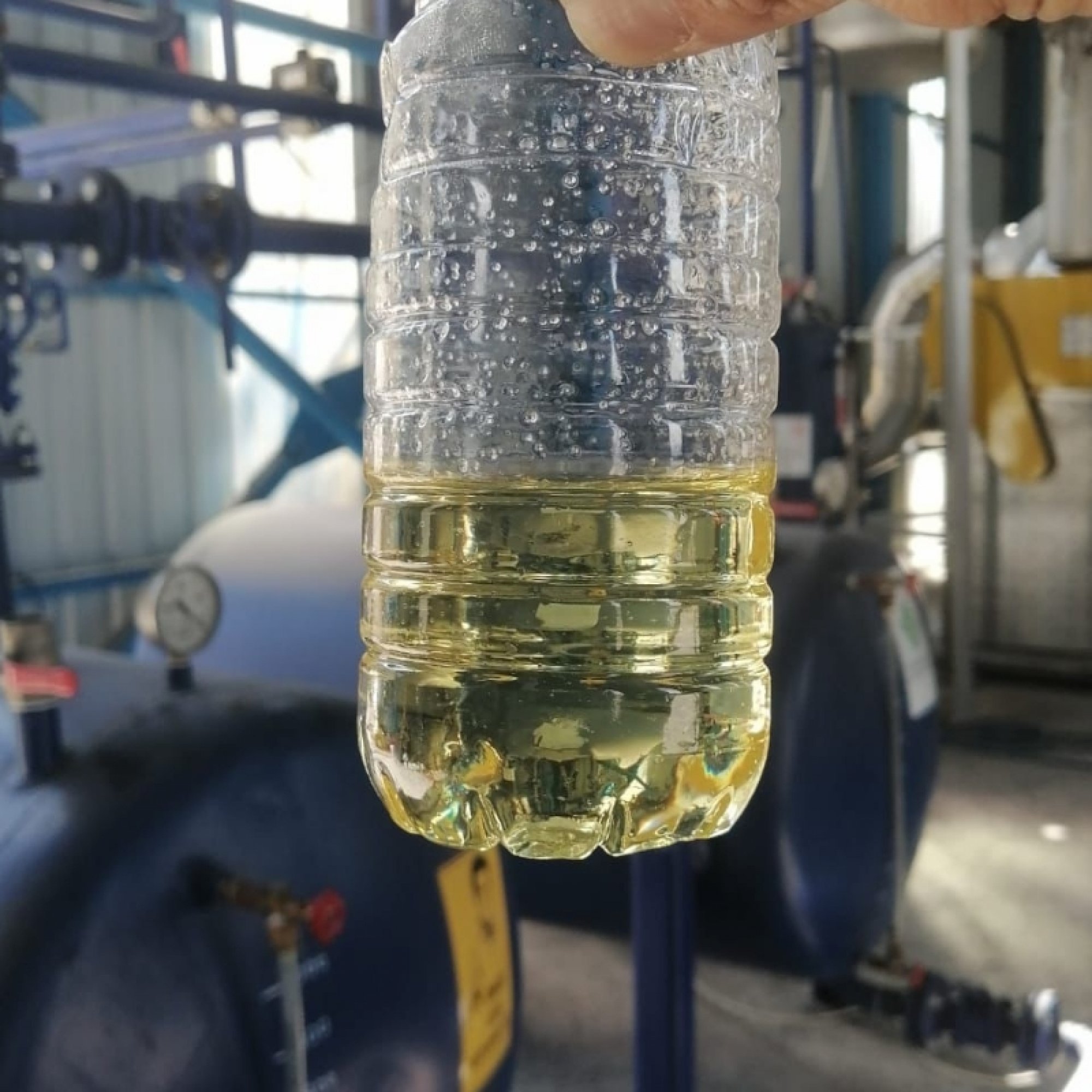
Pyrolysis oil is obtained in varying yields depending on the feedstock. It is used as a diesel substitute, industrial fuel or refinery feedstock. Its calorific value is approximately 9,500–10,500 kcal/kg.

2–35%

Carbon Black

Between 2% and 35% carbon black is recovered depending on feedstock (particularly tyres). It is used in paint, ink, rubber and construction material manufacturing.

5–25%

Synthesis Gas

The combustible synthesis gas released during pyrolysis is typically fed back to the reactor's own heating system as fuel, reducing the plant's energy costs.

Yield Table

Pyrolysis Yield by Feedstock Type

The type and quality of plastic directly affects pyrolysis yield. The table below shows average yield ranges measured under typical laboratory and field conditions.

Scroll right to view all columns

Feedstock Type Oil Yield (%) Carbon Black (%) Gas (%) Oil Calorific Value Typical Source
PE (Polyethylene) 80% – 95% 2% – 5% 5% – 15% ~10,200 kcal/kg Bags, packaging, pipe waste
PP (Polypropylene) 80% – 90% 2% – 5% 5% – 15% ~10,000 kcal/kg Crates, furniture, carpet waste
PS (Polystyrene) 70% – 85% 10% – 15% 5% – 10% ~9,800 kcal/kg Foam, packaging, electrical boxes
ABS 40% – 60% 10% – 20% 10% – 20% ~9,500 kcal/kg Electronic housings, toys
Mixed Plastics 50% – 70% 5% – 15% 10% – 25% ~9,200 kcal/kg Unsorted waste plastic
Waste Tyres / Rubber 40% – 50% 30% – 35% 10% – 15% ~9,600 kcal/kg Vehicle tyres, industrial rubber
Yields may vary by ±5–10% depending on feedstock quality, moisture content and reactor operating conditions. PVC-containing plastics are not accepted as they generate corrosive chlorine gas.
Process Flow

Stages of the Plastic Pyrolysis Process

Waste Plastic Reception and Sorting

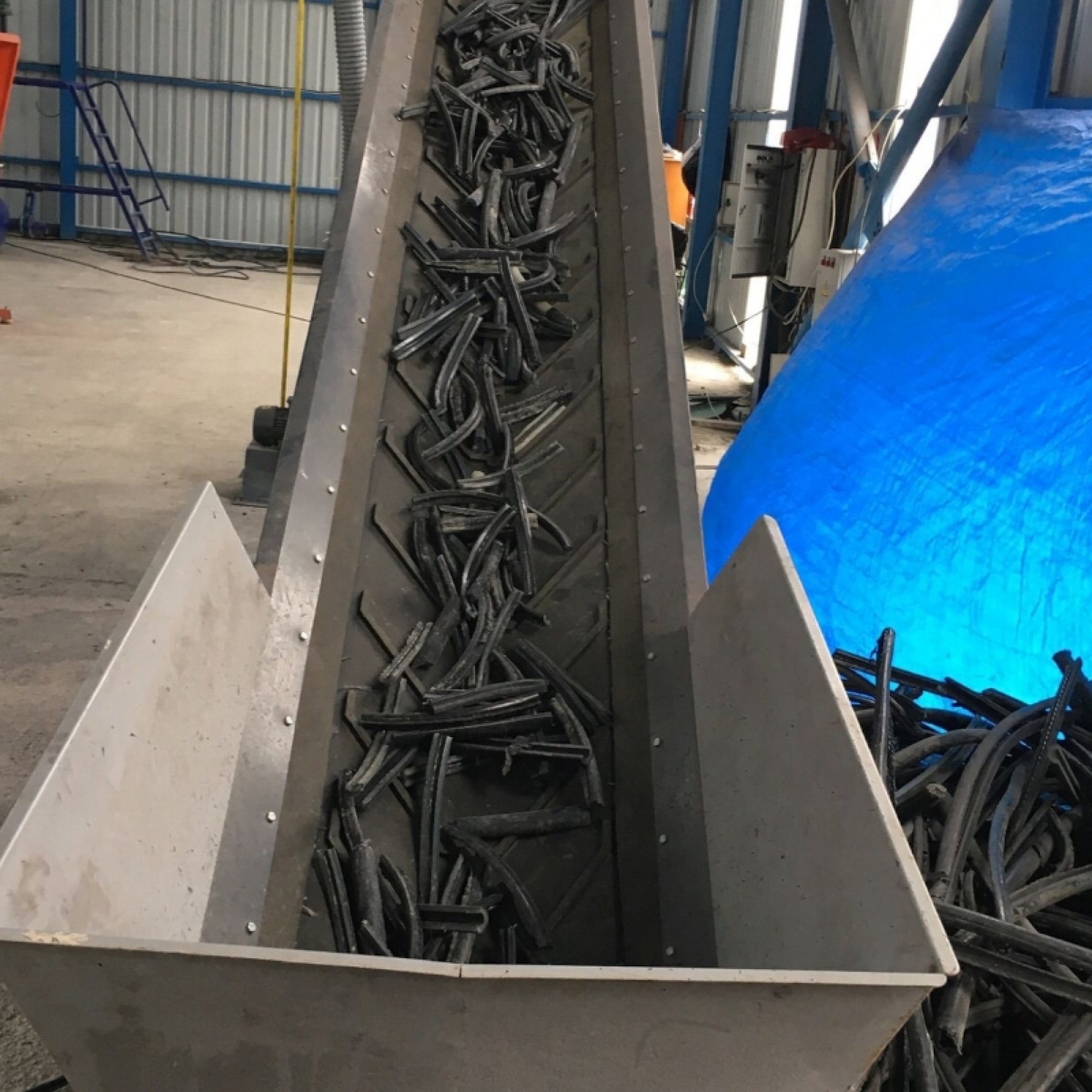
Incoming waste plastics are weighed, cleaned of PVC and other harmful materials, and sorted by type where necessary.

Shredding and Size Reduction

Large pieces are shredded to 3–5 cm by a shredder, making feeding into the reactor easier and ensuring uniform pyrolysis.

Thermal Decomposition in the Pyrolysis Reactor

Plastics are heated to 350–550°C in a rotary or fixed reactor under an oxygen-free atmosphere, breaking molecular bonds and releasing volatile hydrocarbon compounds in gas form.

Condensation and Oil Collection

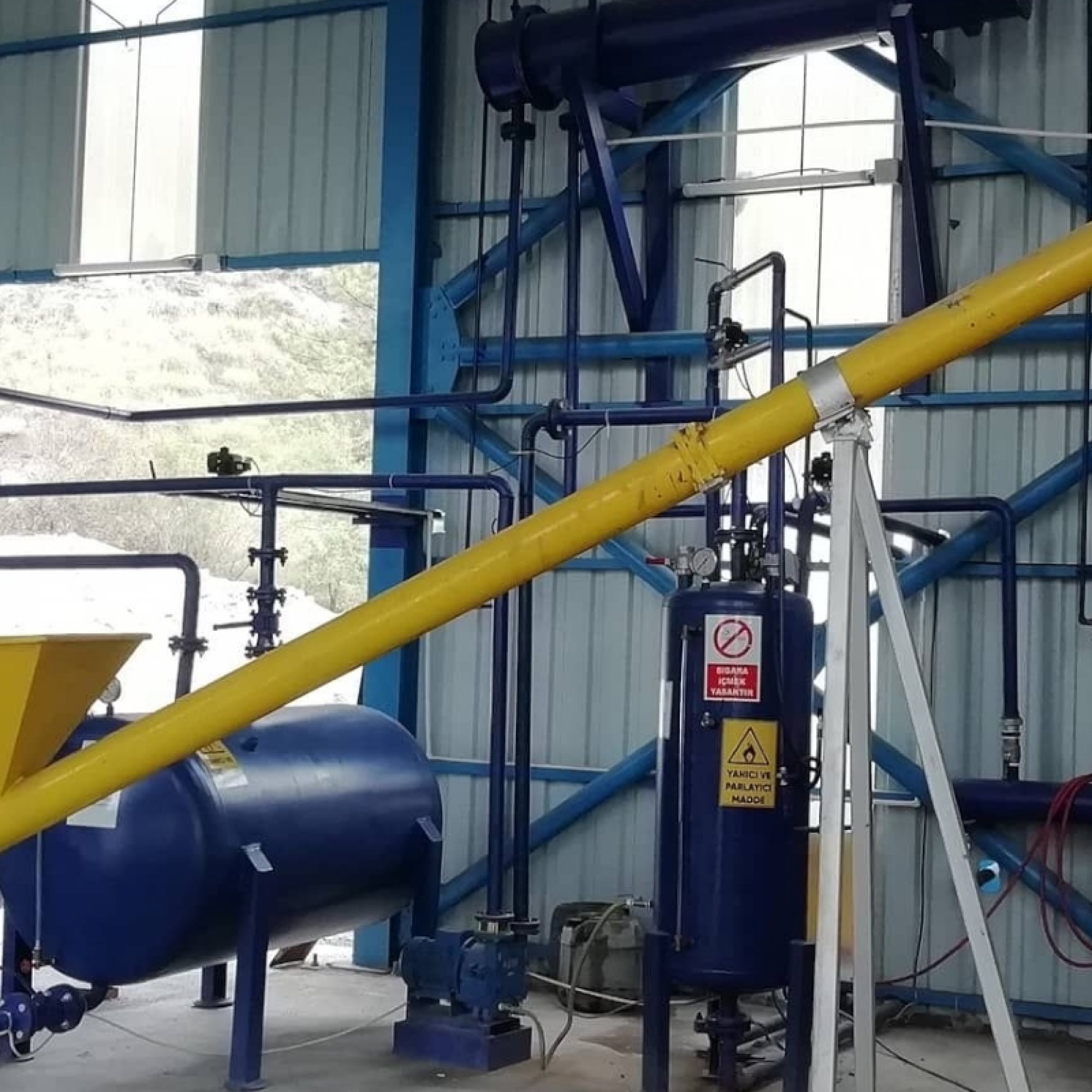
Hot gases from the reactor are cooled in multi-stage condensers (primary and secondary), converting them into liquid pyrolysis oil that is transferred to storage tanks.

Gas Purification and Reactor Recirculation

Non-condensable combustible gases pass through a gas purification system and are fed back to the reactor burner, minimising external fuel requirements.

Carbon Black Extraction and Processing

Solid residue (carbon black) remaining in the reactor is cooled and discharged by mechanical systems. Optionally milled to standard carbon black particle size in a ball mill and packaged in big bags.

Product Storage and Dispatch

Pyrolysis oil is stored in storage tanks and carbon black in big bags or silos, ready for sale.

Model Options

Plastic Pyrolysis Plant Models and Configurations

HK Makine plastic pyrolysis plants are manufactured in different configurations according to capacity, feedstock type and automation level.

Small-Scale Plant (1–5 T/Day)

  • Fixed reactor — batch process
  • Compact design suitable for small sites
  • Manual or semi-automatic feeding
  • Low capital cost, fast installation
  • Ideal for pilot or small-scale recycling operations

Medium-Scale Plant (5–20 T/Day)

  • Semi-continuous or multi-reactor design
  • Automatic feedstock feeding system
  • PLC control panel and remote monitoring
  • Extended condensation and filtration
  • Optimum for mid-size industrial facilities

Large-Scale Plant (20–50 T/Day)

  • Rotary kiln reactor — continuous process
  • Fully automatic feeding and carbon black discharge
  • SCADA system and 24-hour monitoring
  • Multi-stage condensation for higher oil quality
  • Large-scale industrial recycling facility

Turnkey Integrated Plant

  • Shredder + reactor + condensation + gas system — complete set
  • Carbon black milling and packaging included
  • All pipework, pumps and storage tanks included
  • Commissioning, testing and operator training included
  • Annual maintenance and spare parts supply contract
Technical Specifications

Plastic Pyrolysis Plant Technical Components

Pyrolysis Reactor

The reactor shell is manufactured from P355GH or equivalent quality pressure vessel steel rated for high temperatures. Fixed (batch) reactors use a cylindrical shell; rotary reactors use an inclined rotating drum. The reactor interior is lined with heat and wear-resistant alloy steel. Operating temperature is 350–550°C at atmospheric or slightly negative pressure.

Heating System and Burner

Reactor heating is provided by a modulating burner running on natural gas, diesel or synthesis gas. Once the process stabilises, synthesis gas recovered from pyrolysis is fed back to the reactor burner, minimising external fuel consumption. The heating system is controlled automatically via PLC.

Condensation and Oil Collection System

High-temperature hydrocarbon gases leaving the reactor are cooled gradually in multi-stage condensers (primary and secondary). Different boiling-point fractions are separated at each stage and collected in separate tanks as heavy oil and light oil. The condensation system is made from stainless or carbon steel.

Gas Purification and Safety System

Non-condensable combustible gases pass through a dust trap, acid gas scrubber and water seal before being recycled to the burner. An emergency flare system is provided for safe gas disposal. CO and HC sensors perform continuous measurement and trigger automatic shut-down in the event of a leak.

Carbon Black Discharge and Processing

Carbon black accumulating in the reactor is cooled by a screw conveyor or rotary cooler, then removed by vacuum or mechanical system. Optionally ground in a ball mill to N220–N330 equivalent carbon black particle size and packaged with a big-bag filling system.

Control Panel and Automation

The standard automation package includes a PLC control unit, touchscreen HMI panel, temperature and pressure transmitters, level sensors and an emergency stop system. Optional SCADA integration, remote access and GSM alarm system can be added. All process data is recorded.

Capacity and Price

Capacity Table and Price Guide

HK Makine plastic pyrolysis plants are available in custom production for all capacities from 1 to 50 tonnes per day.

Scroll right to view all columns

Capacity Reactor Type Daily Oil Output* Automation Estimated Price (Excl. VAT) Lead Time
1 – 2 T/DayFixed (Batch)800 – 1,900 ltSemi-Automatic800,000 – 1,500,000 TRY45-60 days
3 – 5 T/DayFixed (Batch)2,400 – 4,750 ltPLC Control1,500,000 – 3,000,000 TRY55-75 days
5 – 10 T/DaySemi-Continuous4,000 – 9,500 ltPLC + HMI2,800,000 – 5,500,000 TRY70-90 days
10 – 20 T/DaySemi-Continuous8,000 – 19,000 ltPLC + SCADA5,000,000 – 9,000,000 TRY90-110 days
20 – 50 T/DayRotary Kiln16,000 – 47,500 ltFull Auto SCADA8,500,000 – 15,000,000 TRY100-120 days
*Daily oil output is calculated on a PE/PP feedstock basis. Yield varies for mixed plastics or tyre processing. Pipe installation and electrical works are priced separately.

Custom Project or High Capacity?

HK Makine prepares custom engineering projects for the following situations:

  • Large-scale industrial pyrolysis plants over 50 tonnes/day
  • Dedicated tyre-only processing configurations
  • Refinery integration converting pyrolysis oil to diesel/petrol
  • Carbon black activation and quality upgrade lines
  • Biomass + plastic co-pyrolysis systems
  • Turnkey: shredder + reactor + purification + storage + packaging
Call for Custom Projects: +90 536 037 3281
Applications

Applications of a Plastic Pyrolysis Plant

Uses of Pyrolysis Oil

  • Diesel substitute in generators and heavy machinery
  • Fuel for thermal oil boilers and industrial furnaces
  • Refinery feedstock processing
  • Heavy oil component in asphalt production
  • Cement kiln fuel

Uses of Carbon Black

  • Pigment in paint and ink production
  • Filler in rubber and tyre manufacturing
  • Additive in plastic and masterbatch production
  • Building materials and asphalt additive
  • Electrode and conductive material production

Feedstock Supply Sources

  • Municipal solid waste collection facilities
  • Plastic recyclers (waste fraction streams)
  • Textile factories (synthetic fabric waste)
  • Agricultural sector (greenhouse covers, irrigation pipes)
  • Tyre-fitting centres and vehicle scrapyards

Target Sectors

  • Waste management and recycling companies
  • Energy and fuel production companies
  • Chemical and petrochemical sector
  • Industrial zone and OSB management
  • Municipal waste disposal facilities
Why HK Makine?

HK Makine Plastic Pyrolysis Plant Advantages

High Oil Yield

80–95% pyrolysis oil yield with PE/PP feedstock

3 Valuable Products

Oil, carbon black and synthesis gas from the same process

Custom Capacity

Custom design and manufacturing from 1 to 50 t/day

Turnkey

Fully integrated system from shredder to storage

Low Operating Cost

Synthesis gas burned in reactor reduces external fuel costs

Environmental Compliance

Gas purification system keeps emissions below legal limits

Long Service Life

15+ year service life with high-quality steel reactor

Nationwide Service

Installation, commissioning and annual maintenance from Gaziantep

FAQ

Frequently Asked Questions

Which plastics can be processed in a pyrolysis plant?
PE (polyethylene), PP (polypropylene), PS (polystyrene), ABS and mixed plastics can all be successfully processed. Waste tyres and rubber can also be processed. PVC-containing plastics must be separated as they produce corrosive chlorine gas and must not be fed into the system.
How valuable is pyrolysis oil and where is it used?
Pyrolysis oil has a calorific value of approximately 9,500–10,500 kcal/kg, close to that of diesel. It can be used directly as fuel in generators, heavy machinery, industrial boilers and furnaces. It can also be converted to diesel or petrol through a refining process.
Are permits and licences required for a plastic pyrolysis plant?
Yes. In Turkey, an Environmental Permit/Licence from the Ministry of Environment and Urbanisation and a building permit from the relevant OSB or municipality are required. HK Makine provides support in preparing the required technical documentation for the environmental permit process.
How long does installation and commissioning take?
45–75 days for small-scale plants (1–5 t/day) and 100–120 days for large plants (20–50 t/day). Delivery includes shredder assembly, reactor installation, pipework, electrical connection, test run and operator training.
When does a plastic pyrolysis plant pay for itself?
Plants with a regular feedstock supply operating at over 5 t/day typically reach payback within 2–4 years. The selling prices of pyrolysis oil and carbon black directly affect profitability.
How is carbon black sold and what is its value?
Pyrolysis-recovered carbon black (rCB) can be sold to the paint, ink, rubber and construction sectors. Its market value increases significantly when milled and activated. Depending on quality, the value is approximately 3,000–8,000 TRY per tonne.
What are the maintenance requirements of the plant?
The reactor lining should be inspected annually, and mechanical seals should be checked every 3–6 months. Periodic cleaning of condensation system tubes is required. HK Makine provides periodic inspection, spare parts and technical support through an annual maintenance contract.
Does the plant comply with environmental regulations?
Yes. HK Makine plastic pyrolysis plants are designed with a gas purification system, odour control unit and particulate filter to produce emissions below Turkey's Air Quality Regulation limits. Emission measurement connection points are provided as standard.

HK Makine — Plastic Pyrolysis Plant Manufacturer

Waste Plastic to Fuel | PE / PP / PS / Tyres | Turnkey Installation Across Turkey from Gaziantep

+90 536 037 3281
Get a Quote via WhatsApp

Product Images