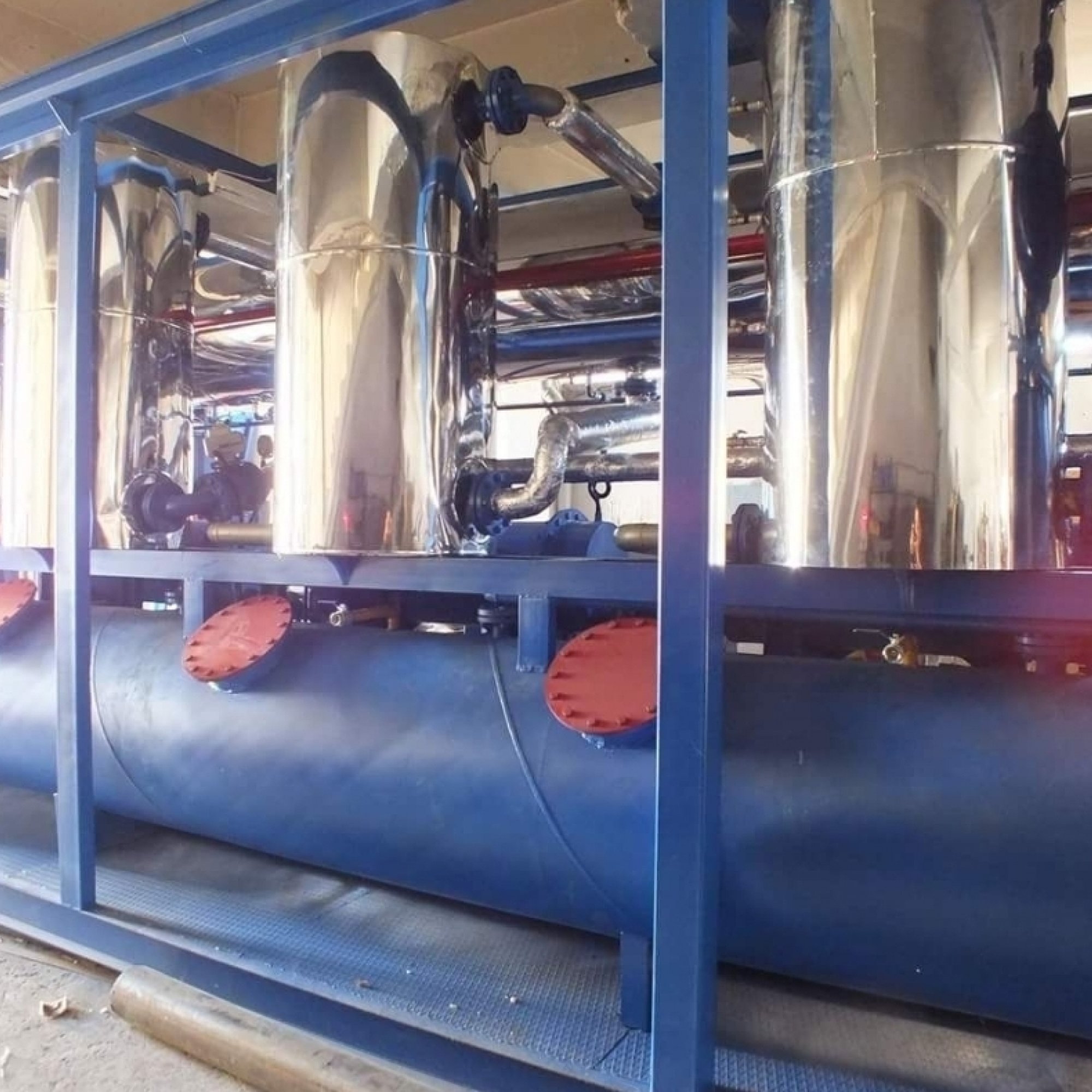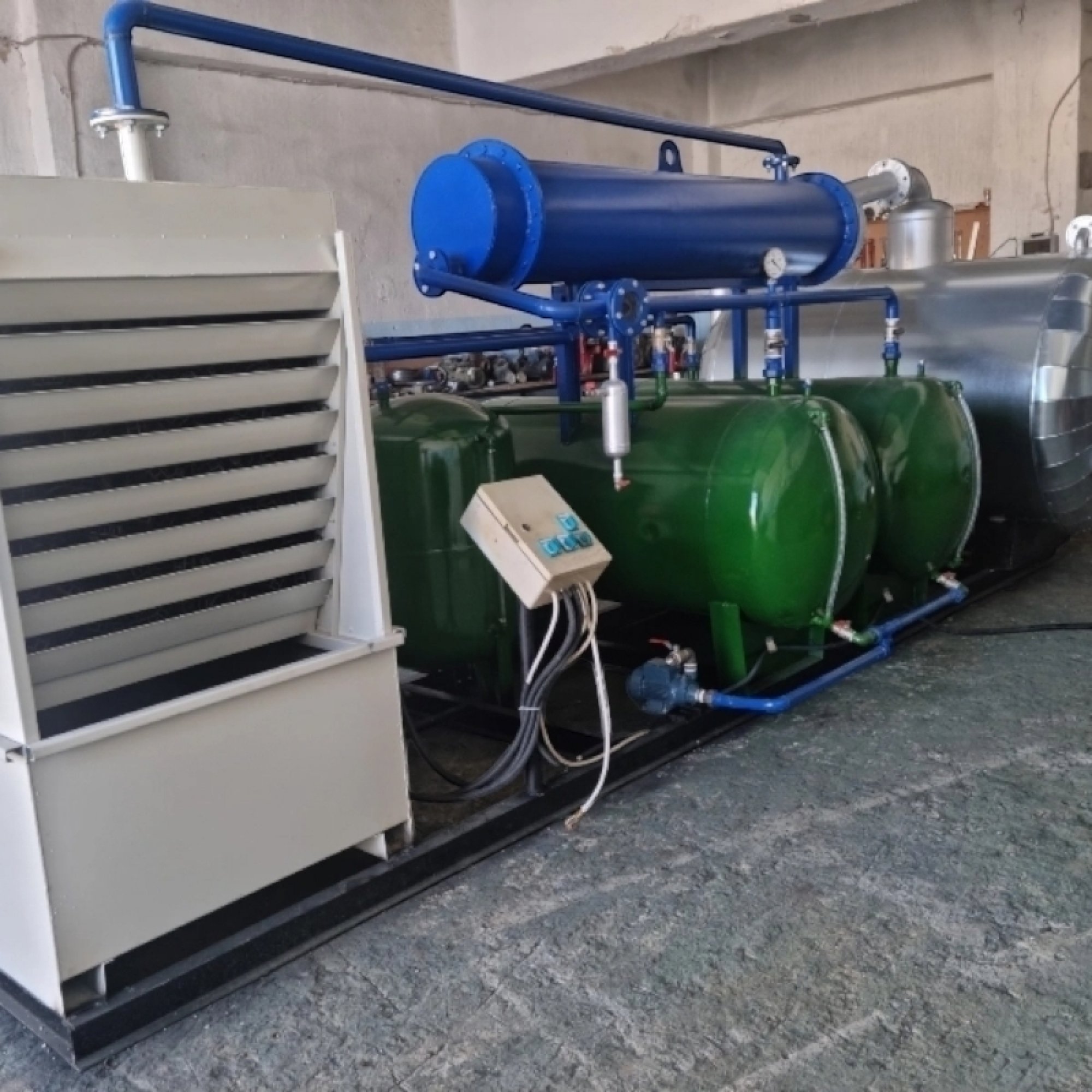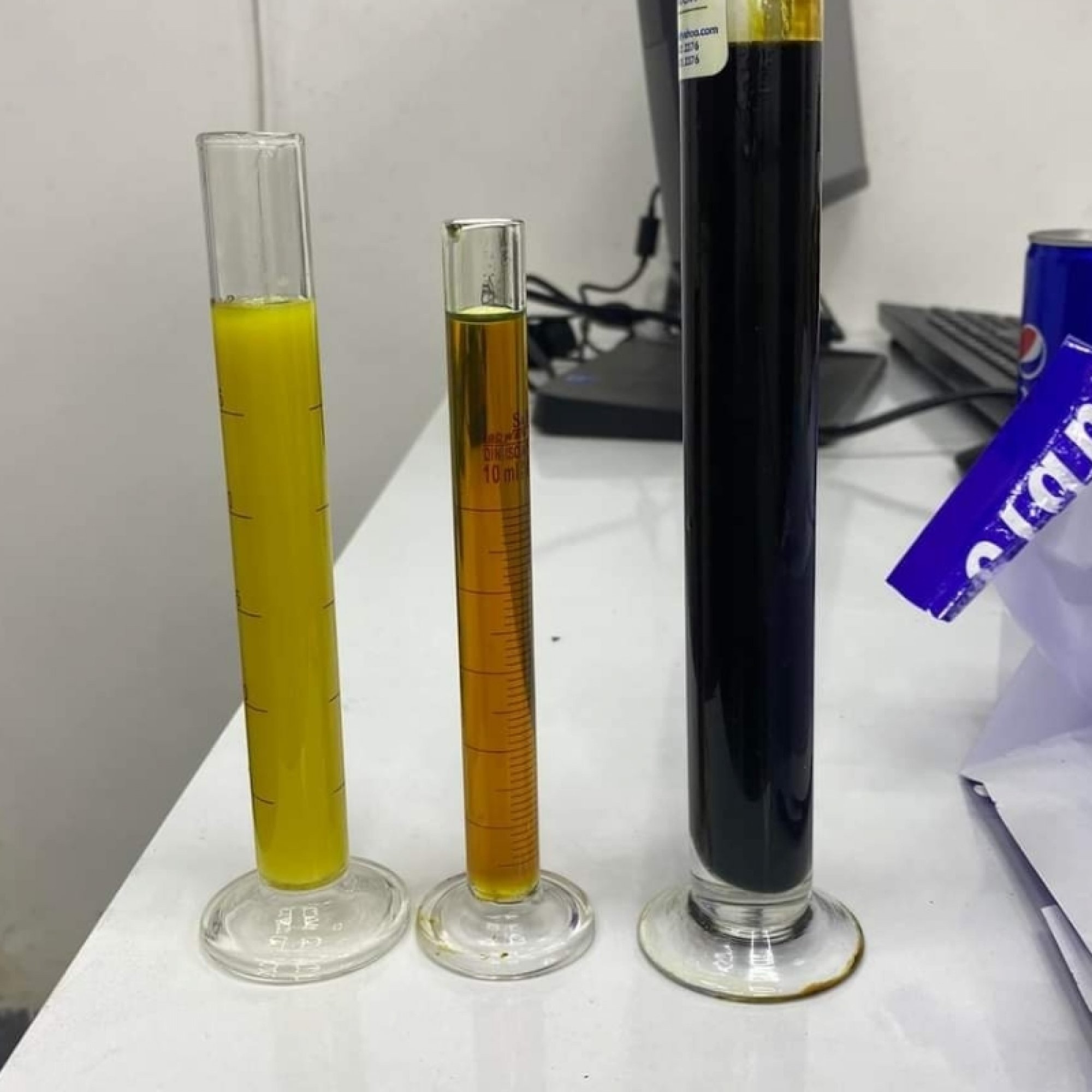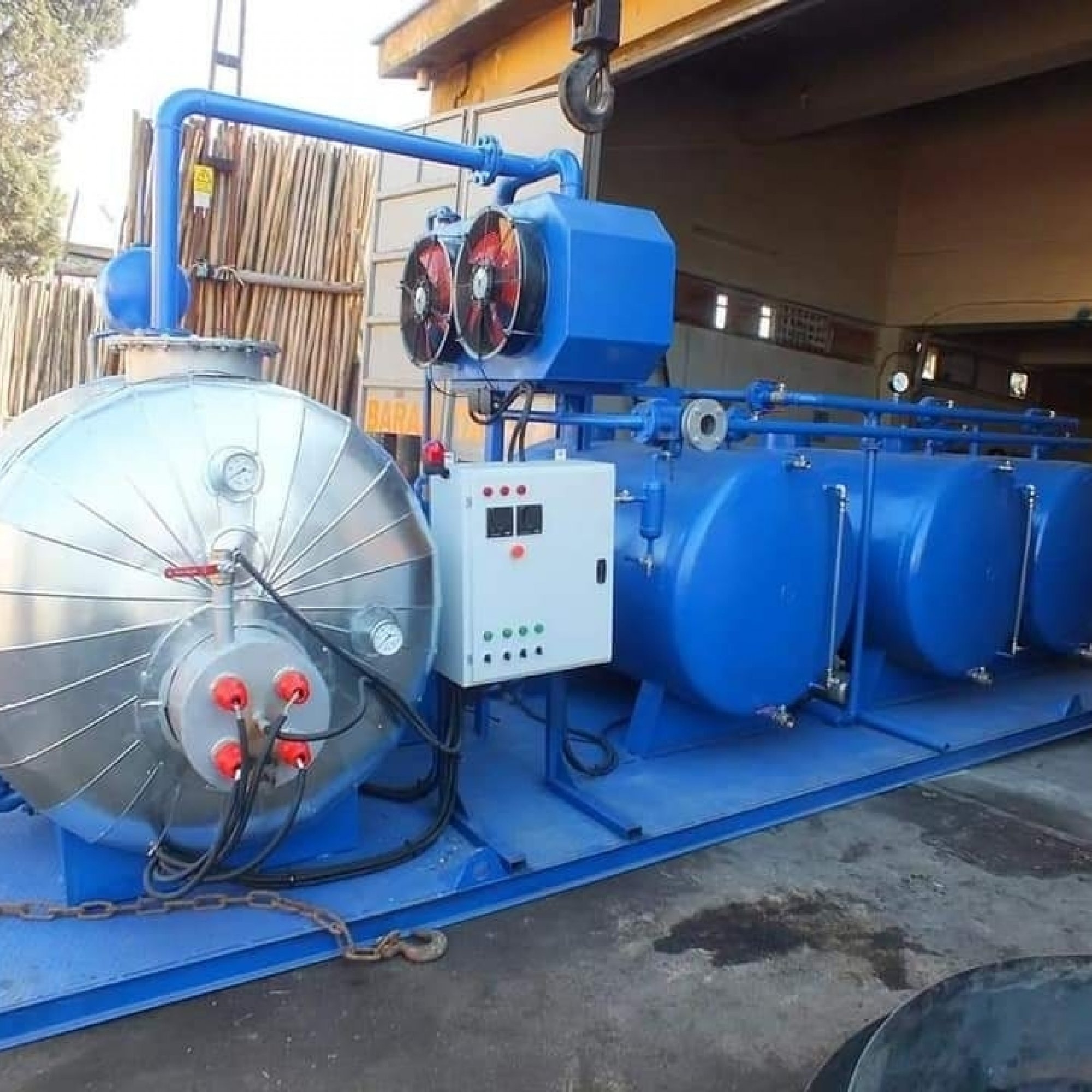
Mobile Crude Oil Refinery Plant

Mobile Crude Oil Refinery Plant

Product Images


Mobile Crude Oil Refinery Plant

Mobile Crude Oil Refinery Plant

Mobile Crude Oil Refinery Plant | 1 Ton - 10 Ton Vacuum Distillation | HK Makine Engineering +90 536 037 3281

Mobile Crude Oil Refinery Plant & Vacuum Distillation Systems

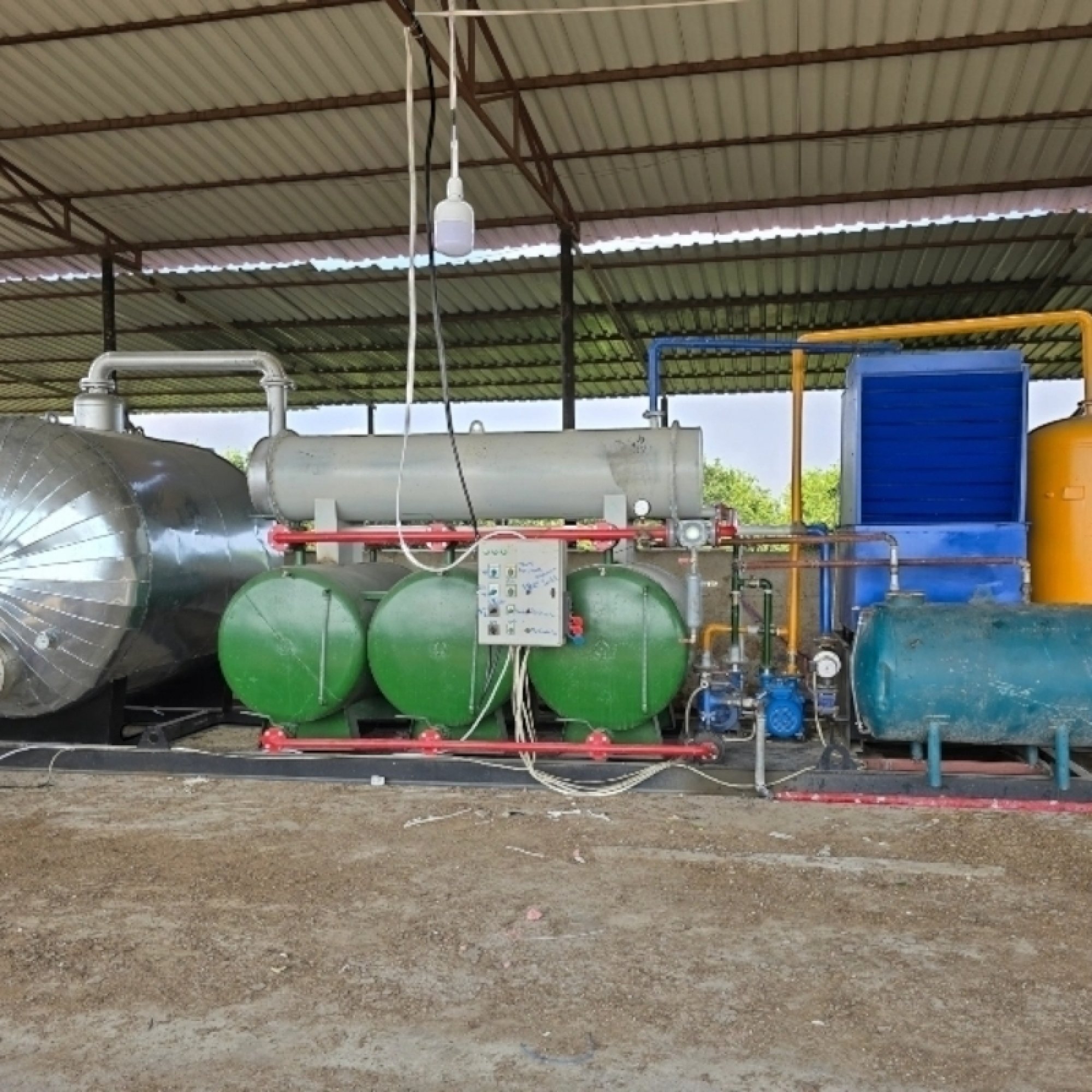
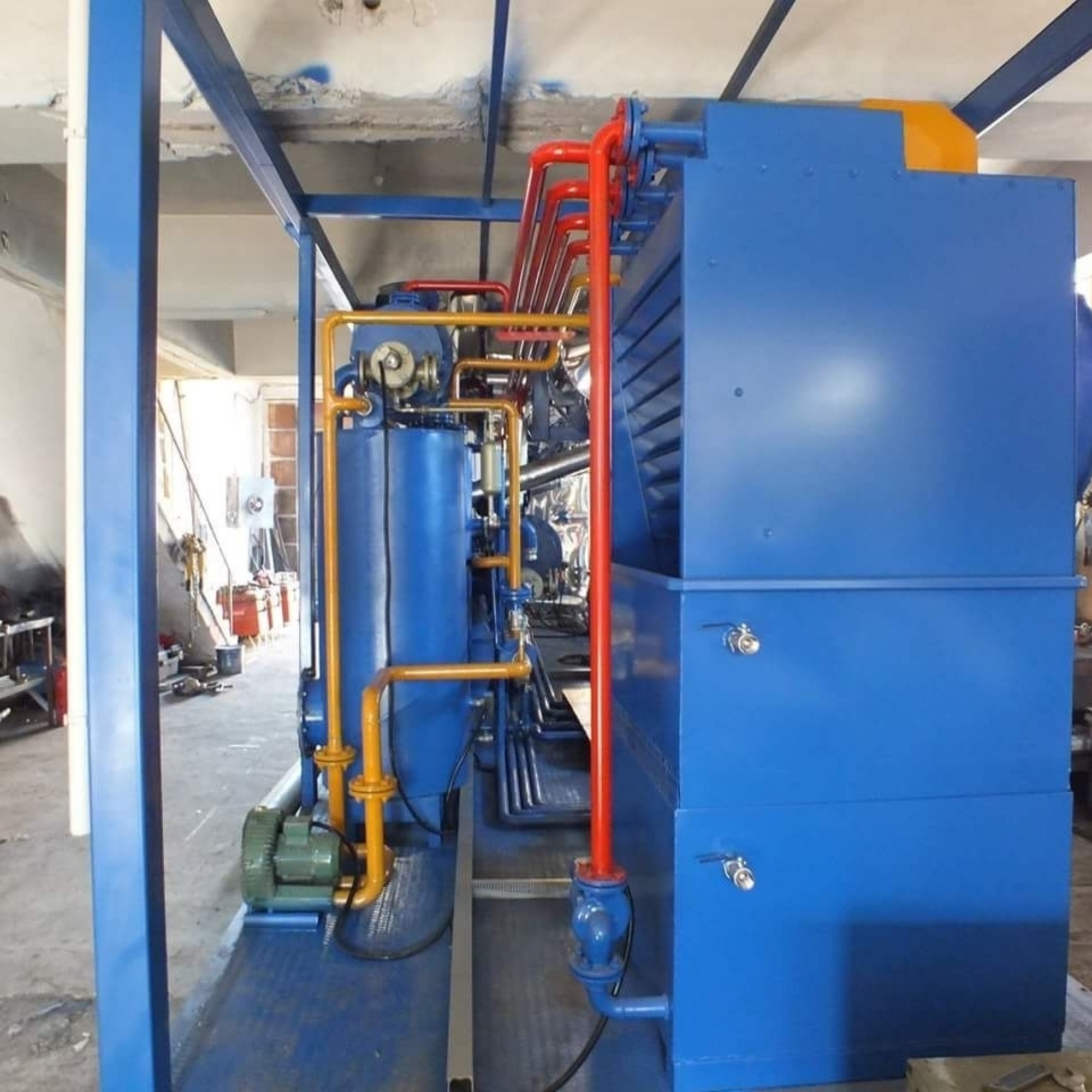
Developed with HK Makine Engineering assurance, 1 Ton - 10 Ton capacity mobile crude oil refinery plants are trailer-mounted, turnkey portable solutions designed to process crude oil on-site at remote wellhead locations into high-quality fuel.

1 Ton - 10 Ton Capacity Range Average 8-Hour Work Cycle CE Certified & 2-Year Warranty 380V Industrial Electricity Gas / Diesel / Fuel Oil Fuel Options Trailer-Mounted Skid Chassis
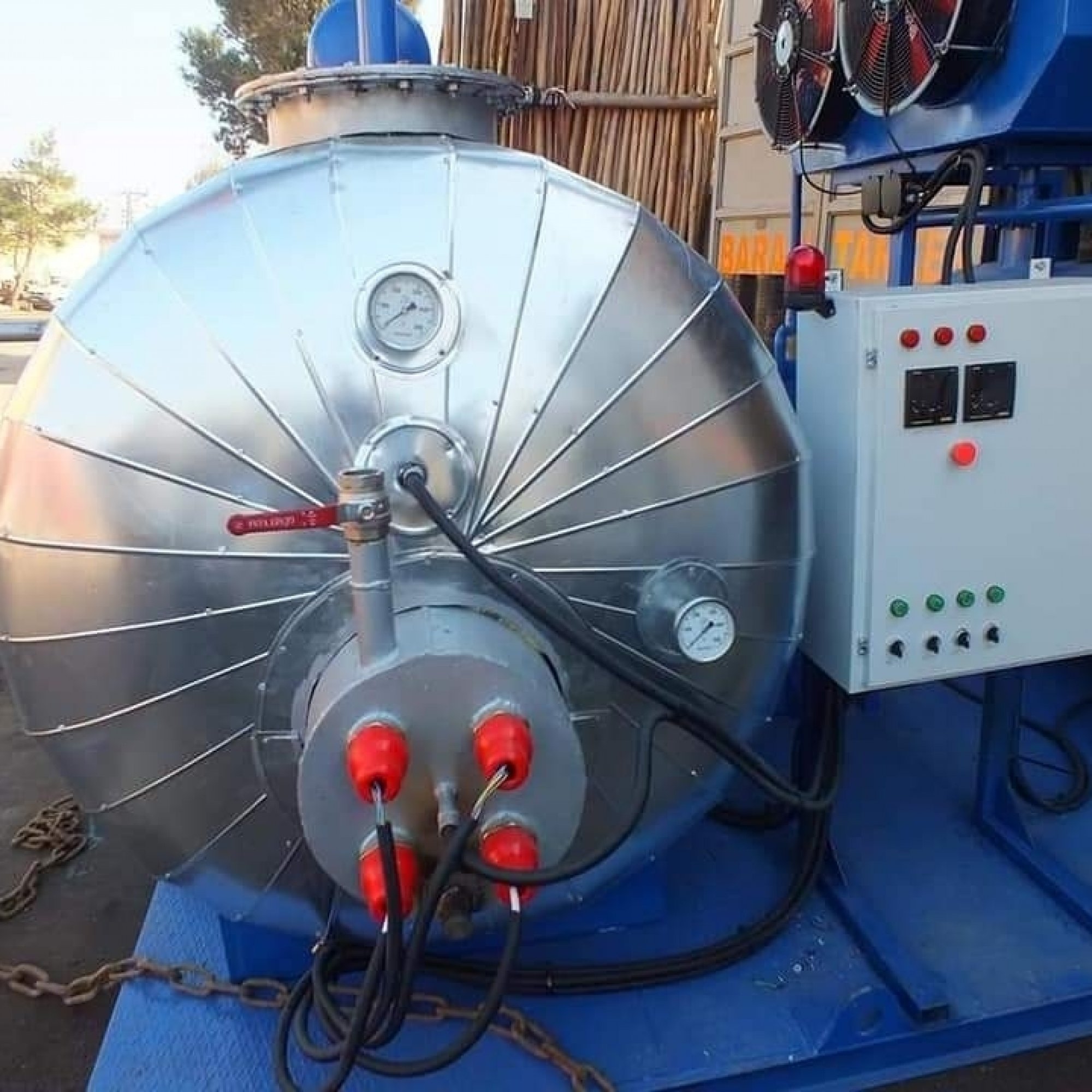
Gaziantep Factory | HK Makine Engineering | Mobile Crude Oil Refinery | 1 Ton - 10 Ton Skid Systems | Horizontal Vacuum Reactor | Global Shipment
1 - 10 Tons
Flexible Batch
Capacities
~8 Hours
Average Full Cycle
Processing Time
380 Volts
Industrial Electricity
Infrastructure
2 Years
Full Manufacturing &
System Warranty
Section 1 - Working Principle & Technical Hardware

Working Principle and Features of the Mobile Crude Oil Refinery Plant

Although the system operates on a batch principle, it exhibits a semi-continuous flow character with high-performance deep vacuum and serpentine technology. The total cycle time is completed in an average of 6 to 8 hours depending on crude oil density and capacity.

Machine Operating Time

The average operation and processing time for each filling (batch) is between 6 and 8 hours. Sequential resting and fast-filling modes are available for 24/7 continuous operation capability.

Machine Installation & Site Assembly

No reinforced concrete construction is required. Brought to the site via trailer, the plant is positioned using a crane by our expert engineering team and commissioned instantly with a "plug-and-play" setup once electrical and piping lines are connected.

CE Certificate & Quality Standards

All our units are manufactured with official CE Certification fully complying with European Union and international safety norms, successfully passing high pressure and explosive atmosphere safety tests.

Machine Warranty Period

Our plant is covered by a 2-Year Full HK Makine Engineering Warranty against manufacturing, mechanical components, reactor vessels, and PLC automation systems.

Electrical Infrastructure

All power, motor, pump, and automation panel infrastructure of the plant is optimized to operate standardly on 380 Volts Industrial Electricity (3 Phase + Neutral + Ground).

3 Different Fuel Type Options (Burner)

To provide flexibility based on the investor's site conditions, 3 alternatives are offered for the reactor heating furnace burner system: 1. Natural Gas / LPG (Gas), 2. Diesel, 3. Fuel Oil.

Step 01

STEP 1: Initialization Phase

The horizontal reactor vessel is filled with raw material. Temperature is at initial value (T = 25°C). All product outlet valves (V1, V2, V3, V4) are in the CLOSED position.

Step 02

STEP 2: Vacuum Activation Phase

The vacuum pump is activated. Internal reactor pressure is reduced to the target vacuum value (-650 mmHg). Rule: Heating DOES NOT start until vacuum reaches the target value.

Step 03

STEP 3: Heating, Exchanger & Sequential Distillation

The heater turns on. Vapor exiting the reactor passes through the shock condenser (exchanger) to cool down. Based on temperature ranges, valves V1, V2, V3, and V4 open sequentially to direct flow into D1, D2, D3, and D4 collection tanks.

Step 04

STEP 4: Shut Down & Cycle End

After all 4 products are collected, the heater is turned off. The vacuum pump is shut down to return system pressure to normal. Bottom products remaining in the reactor are drained, and the system resets for a new charge.

Safety and Risk Management: Light gases such as methane and ethane, which are physically impossible to liquefy in the exchanger, pass safely through the liquid ring of the water-wheel vacuum pump and are routed to a 4,000-liter hookah gas tank. Washed and stabilized here, these gases are directed to the flare (stack burning) line in a controlled manner and burned off. Pressure buildup in the system is completely prevented.

Section 2 - Technical Visual & Global Yield Analysis

HK Makine Engineering Mobile Refinery Plant & Global Average Product Yield Matrix

Average product distribution ratios obtained in standard crude oil distillation plants worldwide, independent of any country, along with fractional analyses of crude oil qualities from various nations:

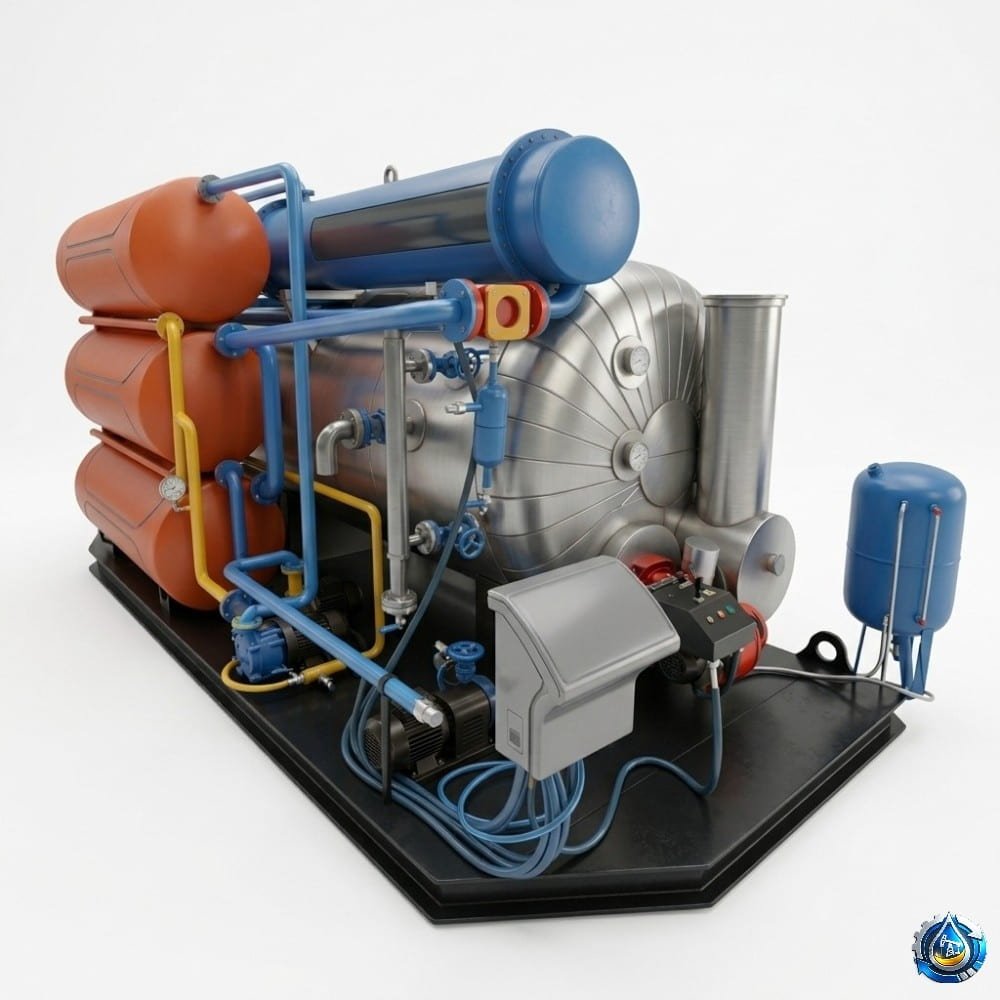
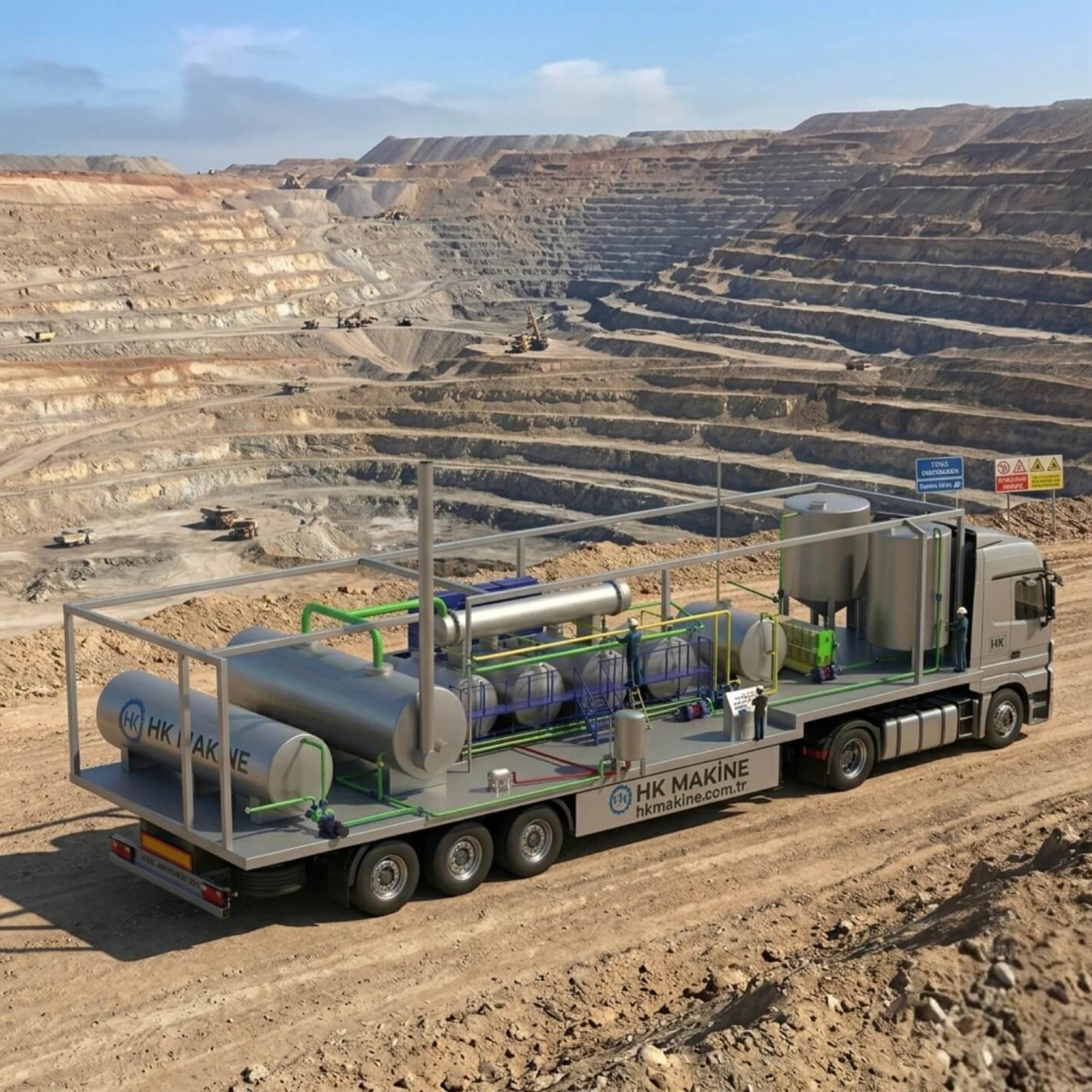
HK Makine Engineering Mobile Crude Oil Refinery Plant 3D Layout
- Integration of reactor, shock exchanger, 4 directional valves, and 4 collection tanks on a single steel skid chassis.

Average Product Distribution via Global Distillation Method

LPG & Light Gases
7%
Straight-run Gasoline
25%
Jet Fuel / Kerosene
12%
Diesel (Gasoil)
28%
Lube Base Oil
8%
Fuel Oil & Asphalt (Bitumen)
20%
INTERACTIVE EXCHANGER BATCH SIMULATOR

Batch Vacuum Distillation & Exchanger Process Simulation

Fast flow scenario: Vacuum reaches target first, then heater activates, passing vapor through the exchanger and filling D1-D4 tanks via V1-V4 valves according to temperature.

Simulation Control Desk

Reactor Temperature (T) 25.0 °C
System Pressure (P) 760 mmHg
Active Phase / Status READY
V1 (Gasoline): CLOSED
V2 (Kerosene): CLOSED
V3 (Diesel): CLOSED
V4 (Heavy Residue): CLOSED
REACTOR VACUUM SHOCK EXCHANGER V1 D1 Tank V2 D2 Tank V3 D3 Tank V4 D4 Tank
Status Log: Waiting for simulation to start...
Section 3 - Capacity & Chassis Matrix

1 Ton to 10 Ton Capacity Ranges and Chassis Dimension Table

Our mobile refinery models, custom-manufactured according to our investors' daily crude oil processing volumes worldwide, are designed with width and length dimensions compatible with standard road trailer transport.

Capacity (Ton/Batch) Reactor Volume (Liters) Avg Duration Chassis Width Chassis Length Chassis Height
1 Ton~1,150 Liters6 - 8 Hours2.50 Meters6.00 Meters3.20 Meters
2 Tons~2,300 Liters6 - 8 Hours2.50 Meters6.00 Meters3.20 Meters
3 Tons~3,450 Liters6 - 8 Hours2.50 Meters12.00 Meters3.20 Meters
4 Tons~4,600 Liters6 - 8 Hours2.50 Meters12.00 Meters3.20 Meters
5 Tons~5,750 Liters6 - 8 Hours2.50 Meters12.00 Meters3.20 Meters
6 Tons~6,900 Liters6 - 8 Hours2.50 Meters12.00 Meters3.20 Meters
8 Tons~9,200 Liters6 - 8 Hours2.50 Meters12.00 Meters3.20 Meters
10 Tons~11,500 Liters7 - 9 Hours2.50 Meters12.00 Meters3.20 Meters
1 and 2-ton systems are produced on a 6-meter compact chassis, while systems between 3 and 10 tons are produced on a 12-meter heavy-duty trailer chassis.
Section 4 - Design Advantages

Superior Advantages Provided by Mobile Design Machinery

Unlike traditional reinforced concrete and fixed refineries, HK Makine Engineering's mobile design grants investors unmatched logistical and operational flexibility:

Rapid Installation & "Plug-and-Play" Architecture

No reinforced concrete construction, mortar, foundation excavation, or site installation required. Brought to the site via trailer, the plant is unloaded by crane and ready for operation as soon as electrical and crude oil feed lines are connected.

Relocation & Portability Flexibility

When wellhead reservoir production life ends or relocation to a new oil field is required, the plant can be effortlessly transported to a new location by attaching it directly to a tractor unit without disassembly.

Low Investment & Rapid Amortization

Offers much lower initial investment cost compared to fixed refineries. Thanks to high-margin gasoline and diesel outputs, the plant fully recovers its investment cost within an average of 3 to 5 months under market conditions.

Overseas & Remote Region Compatibility

Completely eliminates foreign dependency in hard-to-reach desert, mountain, or remote energy fields. The fuel produced can be used immediately for on-site heavy machinery, generators, and transport vehicles.

Section 5 - Economic Analysis

Economic Working Principle and Financial Efficiency

The economic success of our mobile refinery system relies on energy optimization and zeroing out logistical costs by refining crude oil on-site.

Low Energy Consumption: Thanks to heat recovery exchangers used in furnace and serpentine boilers, thermal energy from hot fluids exiting the system is used to preheat incoming cold crude oil. This heat integration reduces fuel consumption by 35%.

Logistical Savings: Transporting crude oil to another city or country via tankers creates serious freight and customs expenses. Processing crude oil at the wellhead to obtain finished products (diesel and gasoline) completely eliminates freight costs, maximizing net profit margins per ton.

Section 6 - Product Quality & Applications

Quality and Sectoral Application Purposes of Obtained Fractions

Technical qualities and sectoral application purposes of high-purity final products obtained from our mobile vacuum distillation unit:

Straight-run Gasoline

Quality & Carbon: C5 - C10 chain, 35°C - 180°C boiling range, high-octane light distillate.

Application Purpose:

  • High-octane gasoline production for automotive engines
  • Polymer and plastic raw material in petrochemical plants
  • Industrial solvent and cleaner production feedstock

Diesel (Gasoil)

Quality & Carbon: C14 - C20 chain, 250°C - 350°C boiling range, >55°C flash point.

Application Purpose:

  • Heavy duty vehicle, truck and trailer motor fuel
  • On-site generator and heavy machinery refuel
  • Agricultural machinery and diesel engine systems

Jet Fuel & Kerosene

Quality & Carbon: C11 - C13 chain, 180°C - 250°C boiling range, fully compliant with Jet A-1 standards.

Application Purpose:

  • Aviation jet engine fuel
  • Lighting and heating systems in remote areas
  • Turbine-powered industrial generator fuel

Lube Base Oil

Quality & Carbon: Heavy intermediate fraction with high viscosity index.

Application Purpose:

  • Automotive and industrial engine oil production
  • Hydraulic system and gear oil blending
  • Primary raw material for specialized lubricants and greases

Fuel Oil (Heavy Fuel)

Quality & Carbon: C20 - C25 chain, high calorific value.

Application Purpose:

  • Industrial boilers and steam generators
  • Marine sector ship fuel (Bunker C)
  • Heavy industry furnace heating

Asphalt & Bitumen

Quality & Carbon: C25+ heavy vacuum residue, high durability.

Application Purpose:

  • Highway surfacing and road construction asphalt
  • Roof insulation and waterproofing membranes
  • Industrial binder coating materials
Section 7 - FAQ Center

Frequently Asked Questions About Mobile Crude Oil Refinery Plant

Answers to all questions frequently asked by international investors regarding our mobile vacuum distillation plants, capacities, product qualities, and shipment processes:

How does batch vacuum distillation work?
The system is first filled with raw material and brought to target pressure (-650 mmHg) via a vacuum pump. Heating does not start until the target pressure is reached. Then, the heater increases temperature; vapor passes through the shock condenser to cool down, and valves V1, V2, V3, and V4 open sequentially based on temperature ranges to direct products into D1, D2, D3, and D4 collection tanks.
What is the capacity range and installation duration?
Our plants are manufactured with flexible capacity options from 1 ton to 10 tons. Since no reinforced concrete construction or foundation excavation is required, the plant brought via trailer is unloaded by crane and commissioned within hours.
What are the electrical infrastructure and fuel options?
Our plant operates with industrial standard 380 Volts electricity. For the furnace burner system, 3 different fuel type options are offered based on site conditions: Natural Gas/LPG (Gas), Diesel, and Fuel Oil.
Is there a CE certificate and what is the warranty?
Yes, all our mobile refinery plants hold official CE Certification complying with international safety norms. Additionally, they are backed by a 2-year full HK Makine Engineering warranty against manufacturing defects.
How are site assembly and commissioning handled?
Turnkey plants manufactured in our Gaziantep facility are fully assembled, piping-integrated, tested, and operator-trained on-site (domestically and internationally) by our expert engineering team.
What final products are obtained from crude oil distillation?
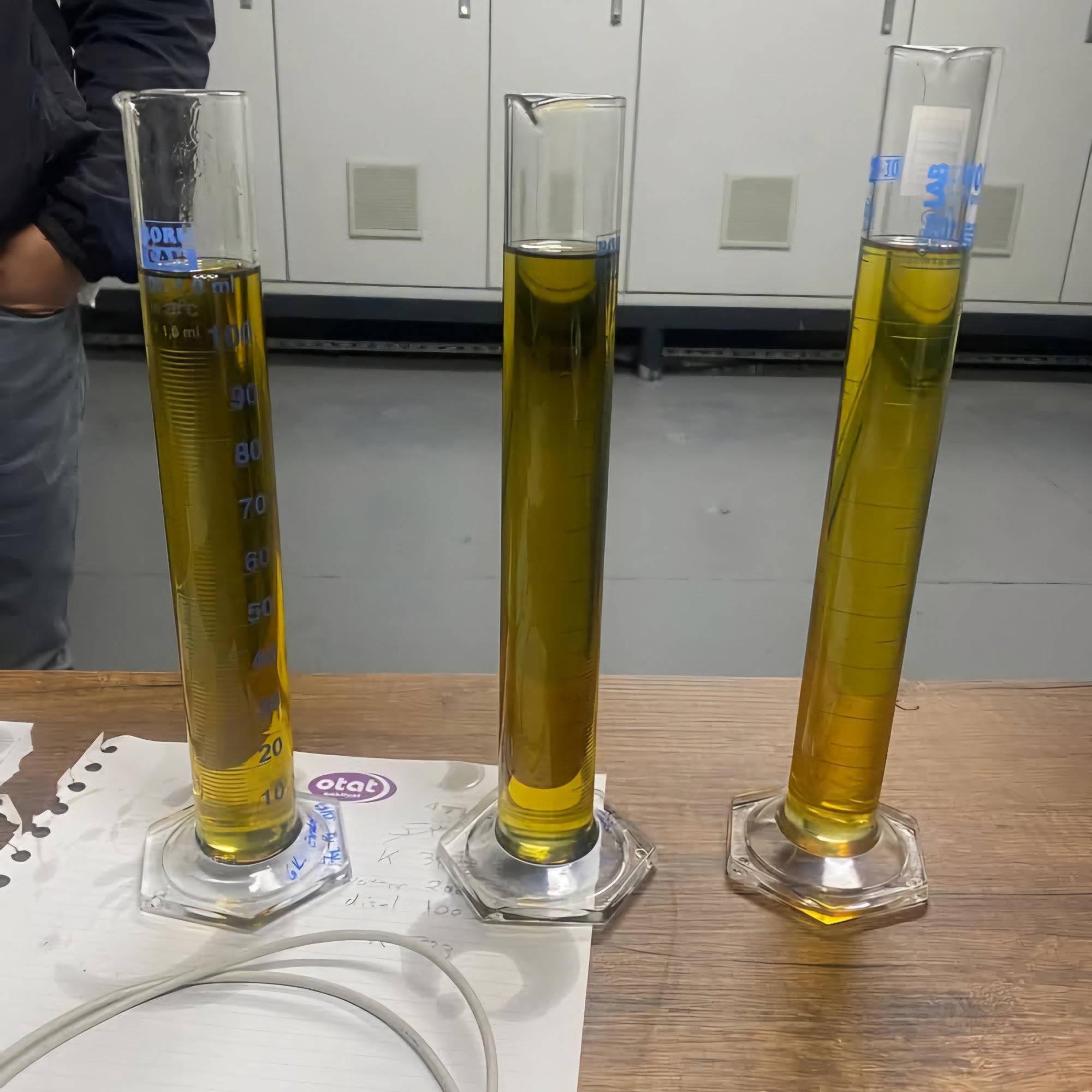
Based on global distillation averages, crude oil yields approximately 7% LPG and light gases, 25% gasoline, 12% jet fuel and kerosene, 28% diesel, 8% lube base oil, and 20% fuel oil & asphalt (bitumen) at high purity.
What economic advantages does mobile design provide to investors?
It offers a very low initial investment cost compared to fixed refineries. By producing directly at the wellhead, high transportation and freight costs are eliminated. High profit-margin fuel outputs allow the plant to amortize its investment cost rapidly.
Are the chassis and trailer dimensions suitable for road transport?
Yes, all our units fully comply with international road transport standards. 1 and 2-ton systems are produced on a 6-meter compact chassis, while capacities between 3 and 10 tons are produced on a 12-meter heavy-duty trailer chassis.

HK Makine Engineering - Mobile Crude Oil Refinery Plant Manufacturing

1 Ton - 10 Ton Horizontal Reactors | Vacuum Distillation | Skid Portable Systems | Gaziantep

+90 536 037 3281
Get Offer via WhatsApp

Product Images